

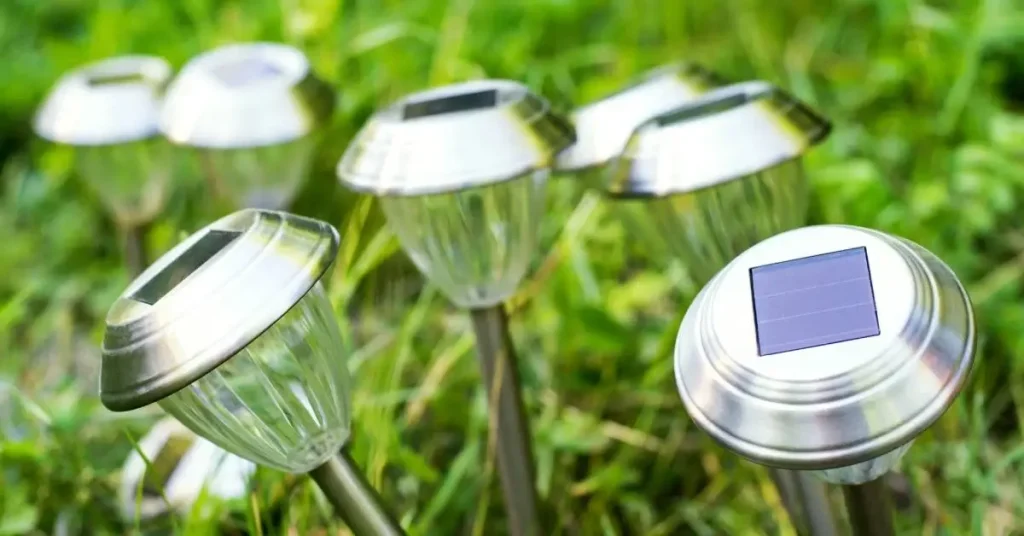
Solar garden lights are a popular way to illuminate walkways, patios, gardens, and driveways without using electricity directly from the home’s power supply. They collect sunlight during the day and use stored energy to provide light after sunset.
However, solar garden lights eventually stop working. Their rechargeable batteries can lose capacity, plastic housings can break, and solar panels can become damaged.
When that happens, many homeowners wonder how to dispose of solar garden lights without harming the environment.
Throwing them directly into a household trash bin is not always appropriate, especially when the lights contain rechargeable batteries. Some batteries can cause fires if they are crushed or damaged during waste collection.
The good news is that many solar garden lights contain components that can be reused or sent to specialized recyclers.
This guide explains how to identify the different parts of a solar light, remove batteries safely, find recycling facilities, and choose a suitable disposal method in the United States.
Can You Throw Solar Garden Lights in the Trash?
The safest general approach is to remove and separately recycle the battery, where the manufacturer permits safe removal, and check whether the remaining light can be accepted by an electronics recycling facility.
Solar garden lights are small electronic devices. They may contain batteries, a photovoltaic solar panel, electrical wiring, LED components, and mixed plastics or metals.
The disposal requirements depend on the battery chemistry, local rules, and whether a recycler accepts the product.
The U.S. Environmental Protection Agency advises that lithium-ion and other rechargeable batteries should not be placed in ordinary household trash or curbside recycling bins. They should be directed to appropriate battery recycling or household hazardous waste collection programs. US EPA+1
What Materials Are Inside Solar Garden Lights?
| Component | Purpose | Recommended handling |
|---|---|---|
| Solar panel | Converts sunlight into electricity | Ask an electronics recycler whether it accepts the panel or complete light |
| Rechargeable battery | Stores energy for nighttime use | Use appropriate battery recycling |
| LED | Produces light | Keep with electronics waste when accepted |
| Plastic housing | Protects the components | Recycle only if the local program accepts this specific item |
| Metal stake or frame | Supports the light | Check local scrap-metal acceptance |
| Electronic circuit board | Controls charging and lighting | Send to an appropriate electronics recycler |
Not every item can be separated safely. Some modern lights are sealed against rain and moisture.
Do not break a sealed battery compartment open or cut wires simply to recover recyclable materials.
How to Dispose of Solar Garden Lights: Step-by-Step Guide?
Step 1: Check Whether the Solar Light Can Be Repaired
Before recycling, determine why the light stopped working.
Sometimes the problem is minor.
Dirt, tree leaves, and outdoor debris can cover the solar panel and reduce charging efficiency.
A depleted rechargeable battery can also prevent the light from turning on.
Start with these simple checks:
- Clean the solar panel with a soft, damp cloth.
- Check whether the on/off switch is in the correct position.
- Inspect the housing for visible damage.
- Make sure the solar panel receives adequate sunlight.
- Check the owner’s manual for battery replacement instructions.
If the light is still in good condition, replacing an accessible battery may extend its usable life.
However, do not attempt to repair lights that have damaged or swollen batteries, exposed electrical components, or severe water intrusion.
Step 2: Identify the Battery Type
Solar lights use several different rechargeable battery chemistries.
Common examples include nickel-metal hydride (NiMH), nickel-cadmium (NiCd), and lithium-ion batteries.
The label may display information such as:
- NiMH AA 1.2V
- NiCd AAA 1.2V
- Li-ion 3.7V
- LiFePO4 3.2V
These markings identify the battery chemistry and nominal voltage.
Do not assume that two batteries with similar dimensions are interchangeable. Using the wrong chemistry or voltage can damage the charging circuit.
If the battery label is unreadable, refer to the product manual or ask a battery recycling facility how to handle an unidentified battery.
Step 3: Remove the Rechargeable Battery Safely
If your light has a user-accessible battery compartment, follow the manufacturer’s instructions.
For many replaceable-battery garden lights:
- Turn the light off.
- Bring it indoors to a dry, well-lit area.
- Locate the battery cover.
- Open the compartment using the recommended method.
- Remove the battery without using sharp tools or excessive force.
- Inspect the battery for damage.
- Place the battery in a suitable container for recycling.
Avoid touching exposed contacts with metal objects.
Never puncture, crush, heat, or attempt to open a battery.
If the battery is swollen, leaking, unusually hot, or physically damaged, do not place it in an ordinary retail collection box. Contact the manufacturer or local household hazardous waste service for specialized handling instructions.
Step 4: Prepare the Battery for Recycling
Rechargeable batteries can create electrical hazards if exposed terminals contact metal or other batteries.
The EPA recommends isolating battery terminals with nonconductive tape or placing batteries in separate bags, especially for lithium-ion batteries.
Electrical tape is generally suitable for covering battery contacts.
Keep the battery label visible whenever practical so the recycling facility can identify its chemistry.
Store batteries in a cool, dry location away from combustible materials until they can be delivered to an appropriate collection facility.
Step 5: Find a Battery Recycling Location
In the United States, battery collection services may be available through recycling centers, participating retailers, and household hazardous waste programs.
A useful starting point is the Battery Network recycling locator.
Enter your ZIP code and select the appropriate rechargeable battery category.
Before visiting, verify that the location accepts the battery chemistry and size you have.
Some drop-off points accept only certain rechargeable batteries, while others have restrictions on damaged batteries.
Step 6: Recycle the Remaining Solar Light
After removing the battery, examine the remaining components.
If the light contains electronics, check whether a local electronics recycler accepts small solar-powered devices.
Do not automatically place the entire light in the curbside recycling bin.
Mixed-material devices can be rejected by facilities designed to process ordinary paper, bottles, and packaging.
Ask the recycler whether the light should be delivered whole or separated into components.
Step 7: Reuse Suitable Parts
Not every broken solar light needs to become waste.
If the materials are clean, undamaged, and safe to handle, you may be able to reuse them.
For example, an intact metal garden stake could support a plant marker. An undamaged outer lantern housing might be used for a non-electrical decoration.
Avoid reusing damaged electrical circuits or attempting homemade battery modifications.
The goal is to extend the useful life of safe materials without creating new hazards.
Where Can You Recycle Solar Garden Lights in the USA?
Recycling availability differs between communities.
| Recycling option | What to check |
|---|---|
| Municipal recycling center | Whether small solar-powered electronics are accepted |
| Household hazardous waste facility | Battery chemistry and drop-off requirements |
| Electronics recycling facility | Whether complete solar lights are accepted |
| Participating retail battery collection | Battery type, size, and condition restrictions |
| Manufacturer take-back program | Eligibility, shipping, and accepted product models |
| Scrap-metal recycling facility | Whether separated metal components are accepted |
A general search for solar light recycling near me may identify nearby facilities, but always verify what each location accepts.
Why Proper Solar Garden Light Disposal Matters?
Solar garden lights may help reduce electricity use, but their environmental benefits do not eliminate the need for responsible disposal.
The batteries contain materials that require careful handling. Electronic components also contain recoverable metals and other resources.
When recyclable materials are collected through appropriate programs, some of those resources can be recovered for use in manufacturing.
Proper recycling also helps prevent batteries from entering waste collection equipment where crushing and short circuits may create fire risks.
Recycling Is Better Than Unnecessary Replacement
Buying a new solar light every time the old battery becomes weak generates avoidable waste.
If your light uses a replaceable battery, check whether a compatible replacement is available.
Some manufacturers sell battery packs or replacement solar heads for their products.
A small repair can sometimes preserve the light housing, mounting hardware, and electronics for further use.
Also Read:
- How to Clean a Heat Pump Water Heater Air Filter: Step-by-Step Guide
- Do Solar Panels Work During Wildfire Smoke? Efficiency Explained
Common Mistakes to Avoid
- Putting rechargeable batteries into ordinary household recycling.
- Breaking sealed battery compartments open.
- Mixing loose batteries with metal scraps.
- Treating every plastic garden light as curbside-recyclable plastic.
- Using damaged or swollen batteries in another electronic device.
- Assuming that every electronics recycling center accepts solar panels.
- Replacing the battery with the wrong chemistry or voltage.
How to Choose More Environmentally Friendly Solar Lights?
When purchasing replacement lights, look beyond appearance and brightness.
Choose products with replaceable batteries where possible. Check whether spare parts are sold and whether the housing is durable enough for outdoor weather.
Weather-resistant construction can extend product life, but a permanently sealed device may be difficult to repair.
Consider lights that have clear battery markings, manufacturer support documentation, and replaceable components.
Buying a product that lasts longer can reduce the number of discarded devices over time.
FAQs About Solar Garden Light Disposal
Can solar garden lights go in regular trash?
Solar garden lights often contain rechargeable batteries and electronic components. Do not place lithium-ion or other rechargeable batteries in regular household trash or curbside recycling. If the battery can be removed safely, take it to an appropriate battery collection service. Check local rules for the remaining housing.
Can I recycle the solar panels from garden lights?
Small solar panels may be accepted by specialized electronics recyclers, but acceptance varies. Their materials are not necessarily suitable for ordinary household recycling. Contact a facility before visiting and ask whether it accepts small photovoltaic modules or complete solar garden lights.
Are solar garden light batteries hazardous?
Rechargeable batteries require careful handling, and certain types can become dangerous when damaged, punctured, heated, or short-circuited. Lithium-ion batteries in particular can present a fire risk. Keep batteries protected, avoid physical damage, and follow appropriate collection instructions.
Can I replace batteries instead of throwing the lights away?
Yes, if the manufacturer designed the battery to be replaceable. Use the specified battery chemistry, voltage, and physical size. Do not substitute a lithium battery for a nickel-metal hydride battery simply because it fits into the compartment.
Where can I recycle solar garden lights near me?
Contact your municipal solid waste department, a local electronics recycling provider, or a household hazardous waste program. For removable rechargeable batteries, use a verified battery recycling locator and confirm that the collection site accepts the specific battery.
What should I do with solar lights that have sealed batteries?
Do not force the housing open or cut into an internal battery pack. Contact the manufacturer or an electronics recycler that accepts devices with embedded batteries. Keep the device intact unless the manufacturer provides safe battery-removal instructions.
Conclusion
Learning how to dispose of solar garden lights is an easy way to make outdoor lighting more environmentally responsible. Start by checking whether the light can be repaired. If it cannot, identify the battery type, remove accessible batteries safely, and find an appropriate recycling facility.
Remember that rechargeable batteries require separate handling, and the remaining electronics may need specialized recycling. A few careful steps can help reduce unnecessary waste while keeping potentially hazardous batteries out of regular household disposal systems.
Related:
Solar light recycling, solar garden light battery disposal, recycle solar lights, outdoor solar light disposal, solar light recycling near me, electronic waste recycling