

Baseboard heaters are a popular heating option in many American homes, apartments, and older residential buildings. They provide warmth without requiring large heating vents or bulky floor-standing equipment. However, because these heaters are installed close to the floor, they can collect dust, pet hair, lint, and other household debris over time.
Learning how to clean baseboard heaters properly can help you maintain airflow, reduce unpleasant burning-dust smells, and keep the heating equipment in better condition.
Many homeowners regularly vacuum their floors and dust their furniture but forget about the heating units installed along the walls. Unfortunately, dust can settle inside the covers and between the thin metal fins that help transfer heat into the room.
When the heating system turns on, accumulated dirt may interfere with airflow and create an unpleasant smell. In some situations, blocked vents and improper maintenance can also contribute to overheating.
Fortunately, routine exterior cleaning is usually straightforward. With a vacuum cleaner, soft brush, microfiber cloth, and a few basic precautions, you can remove much of the accumulated dust.
However, electric and hot-water baseboard heaters have different safety requirements. You must identify your heater type before starting.
This guide explains how to clean baseboard heaters step by step, including electric and hydronic models, cleaning heating fins, removing approved covers, avoiding common mistakes, and maintaining your heating system throughout the year.
What Are Baseboard Heaters?
Baseboard heaters are long, narrow heating units commonly installed along the bottom of a wall.
They are often positioned beneath windows or along exterior walls where additional heating may be useful.
Most baseboard heaters warm a room through natural convection.
Cooler room air enters the lower part of the heater. As the air passes the heating element or hot-water tubing, it becomes warmer and rises into the room.
This circulation helps distribute heat without requiring a large built-in fan.
Main Types of Baseboard Heaters
There are two common categories.
1. Electric baseboard heaters
These heaters use electrical resistance to generate heat. The heating element is housed inside a metal enclosure that allows air to enter and exit.
2. Hot-water or hydronic baseboard heaters
These systems circulate heated water through tubing connected to a boiler or another heat source. Metal fins surrounding the tubing help transfer warmth into the room.
Some electric baseboard products also use sealed heat-transfer fluid. These should be maintained according to their electrical manufacturer’s instructions rather than treated as ordinary boiler-fed hot-water units.
Why Is Cleaning Baseboard Heaters Important?
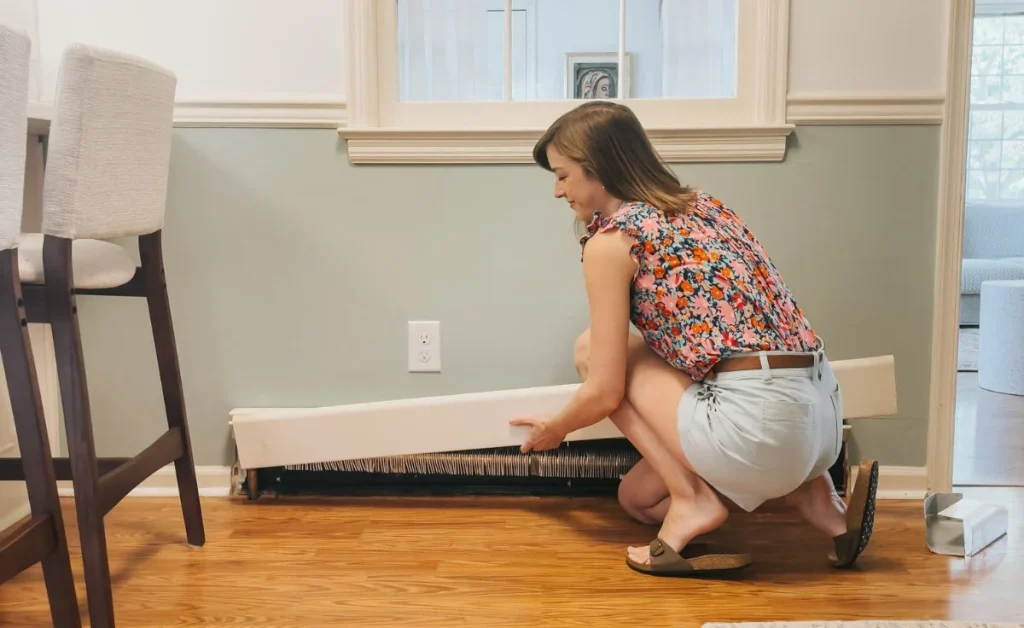
Baseboard heater cleaning is more than a cosmetic household task.
Dust and debris can affect airflow, create unpleasant odors, and make maintenance more difficult.
1. Helps Maintain Proper Airflow
Many baseboard heaters depend on air entering through lower openings and exiting through upper openings.
Dust, pet hair, and lint can accumulate around these areas.
Removing debris helps keep the airflow path clear.
2. Reduces Burning-Dust Smells
When a heater has not operated for several months, dust may settle on its warm surfaces.
The first heating cycle of the season can produce a temporary dusty smell.
Cleaning the unit before the heating season can help reduce this problem.
However, strong, persistent, electrical, or plastic-like burning smells require immediate attention.
3. Supports Heating Performance
Blocked airflow or debris-covered fins may reduce how effectively heat enters the room.
Cleaning can help restore normal airflow, although it will not necessarily lower energy bills by a measurable amount.
The actual effect depends on the heater’s condition and the amount of buildup.
4. Helps Identify Damage Early
Cleaning gives you an opportunity to notice corrosion, damaged covers, unusual discoloration, and visible leaks.
Identifying these problems early can help you arrange appropriate maintenance before they become more serious.
5. Helps Keep the Area Cleaner
Dust inside a heater can become disturbed as warm air moves through the unit.
Removing buildup also makes the surrounding floor and wall easier to maintain.
Electric vs. Hot-Water Baseboard Heaters: Cleaning Differences
Although both heater types may look similar, their internal systems are different.
| Feature | Electric baseboard heater | Hot-water baseboard heater |
|---|---|---|
| Heat source | Electrical resistance | Hot water from a heating system |
| Common internal component | Electric heating element | Copper or other metal tubing with fins |
| Electrical hazard | Present inside heater | Depends on associated components |
| Main cleaning concern | Dust around heating element and airflow openings | Dust between fins and around tubing |
| Before cleaning | Turn off circuit breaker and allow cooling | Turn off heating demand and allow system to cool |
| Cover removal | Only as permitted by manufacturer | Only as permitted by manufacturer |
| Common maintenance | Vacuuming and cleaning accessible surfaces | Vacuuming fins and inspecting for leaks |
If you cannot confidently identify your heater, do not remove its housing.
Look for the manufacturer’s label, product manual, boiler information, or help from a qualified heating technician.
Tools and Supplies Needed to Clean Baseboard Heaters
You do not need expensive cleaning equipment for most routine maintenance.
Baseboard Heater Cleaning Supplies Checklist
| Supplies | Purpose |
|---|---|
| Vacuum cleaner | Removes loose dust and debris |
| Soft brush attachment | Cleans accessible fins and openings |
| Crevice attachment | Reaches narrow gaps |
| Microfiber cloth | Wipes exterior surfaces |
| Soft-bristled brush | Loosens stubborn surface dust |
| Small flashlight | Helps inspect hard-to-see areas |
| Mild dish soap | Cleans compatible removable covers |
| Small bowl of water | Used only for appropriate exterior cleaning |
| Drop cloth | Collects falling dust |
| Protective gloves | Helps protect hands from sharp edges |
| Safety glasses | Protects eyes from falling dust |
A vacuum with good filtration may be helpful when cleaning dusty equipment.
Avoid using metal brushes, sharp scrapers, or abrasive pads.
The thin fins inside some heaters can bend easily, and electric heating elements can be damaged by force.
Important Safety Precautions Before Cleaning
Before learning how to clean electric baseboard heaters or hot-water systems, understand the main safety rules.
Turn Off the Heater Completely
For an electric baseboard heater, turn off the circuit breaker supplying the heater.
Simply lowering the thermostat may not disconnect all electrical power.
If you cannot identify the correct breaker, ask a qualified electrician rather than guessing.
For a boiler-fed hot-water system, turn off the appropriate heating demand using the controls specified in the system manual.
Wait Until the Heater Is Cool
Never begin cleaning a hot heater.
Metal surfaces, heating elements, and hydronic pipes may remain hot after the system stops running.
Wait until all accessible surfaces have cooled completely.
Do Not Touch Electrical Components
Never open electrical junction boxes or touch wires during routine cleaning.
If a cover exposes wiring or electrical connections, stop and consult the manufacturer’s instructions or a qualified electrician.
Avoid Spraying Water Inside
Do not spray water, vinegar, household cleaners, or disinfectant directly into electric baseboard heaters.
Moisture can damage electrical components and may create a shock hazard.
Do Not Force the Cover
Different manufacturers use different cover designs.
Some covers are intended to open or detach for cleaning, while others should not be removed by homeowners.
If you encounter resistance or cannot identify the release method, leave the cover in place.
Keep Combustible Materials Away
Furniture, curtains, bedding, paper, and other items must not obstruct heater openings.
Follow your specific heater’s clearance requirements.
How to Clean Electric Baseboard Heaters Step by Step
Electric baseboard heaters require additional caution because they contain energized components during normal operation.
The following procedure is appropriate for basic cleaning of accessible areas, subject to the manufacturer’s instructions.
Step 1: Turn Off the Power at the Circuit Breaker
Locate your home’s electrical panel.
Identify the breaker that supplies the baseboard heater.
Switch it to the OFF position.
If you are uncertain which circuit controls the heater, do not proceed with internal cleaning.
A qualified electrician can help identify and safely isolate the circuit.
Important: Turning the thermostat down does not necessarily remove electrical voltage from the heater.
Step 2: Let the Heater Cool Completely
After switching off the breaker, wait until the heater is completely cool.
Do not test the surface with your bare hand while it may still be hot.
Allow sufficient time based on the heater’s design and how recently it was operating.
Step 3: Clear the Surrounding Area
Move lightweight furniture and household objects away from the heater.
Keep curtains and loose fabric clear.
Place a drop cloth on the floor to catch dust.
This will make the cleaning process easier and reduce the need to clean the surrounding area afterward.
Step 4: Inspect the Heater
Use a flashlight to inspect the top and bottom openings.
Look for:
- Accumulated dust.
- Pet hair.
- Lint and fabric fibers.
- Small pieces of debris.
- Damaged metal sections.
- Signs of overheating.
- Loose or damaged covers.
If you notice melted plastic, exposed wiring, scorch marks, or severe damage, stop and arrange professional inspection.
Step 5: Vacuum the Exterior Openings
Attach a soft brush or crevice tool to your vacuum cleaner.
Carefully vacuum the accessible openings.
Begin near the upper vent and continue toward the lower intake area.
Use light pressure and avoid pushing the nozzle against internal components.
The goal is to remove loose debris without damaging the heater.
Step 6: Open the Cover Only If Permitted
Consult your heater’s user manual.
If the manufacturer explicitly permits opening or removing the front cover for cleaning, follow that procedure.
Some covers lift, tilt, or unclip. Others have fasteners or configurations that should not be disturbed during homeowner maintenance.
Never remove electrical enclosures or wiring covers.
Step 7: Remove Dust From Accessible Interior Areas
If the manufacturer permits access, use a suitable vacuum attachment to remove dust.
Keep the nozzle away from delicate heating elements and electrical connections.
Do not scrape or pull on components.
Avoid using metal tools inside the heater.
Some manufacturers recommend controlled use of an air blower for specific models. Follow those instructions only where applicable, as blowing dust can spread particles through the room.
Step 8: Wipe the Outer Housing
Use a clean, dry microfiber cloth to remove remaining dust.
If the manufacturer’s instructions allow it, use a slightly damp cloth with mild soap to clean the external housing.
Do not allow liquid to run into vents or electrical components.
Dry the housing thoroughly.
Step 9: Reinstall the Cover
If you removed an approved cover, reinstall it following the manufacturer’s instructions.
Make sure it is secure and correctly positioned.
Do not operate the heater with required covers missing.
Step 10: Clean the Surrounding Floor
Vacuum dust that has fallen onto the floor.
Remove the drop cloth carefully.
Check that furniture and curtains are positioned according to the manufacturer’s clearance requirements.
Step 11: Restore Power and Test
Once the heater is clean, dry, fully assembled, and unobstructed, restore power at the breaker.
Adjust the thermostat to request heat.
Observe the heater during its initial operation.
If it trips the breaker, produces unusual noises, or develops a persistent burning smell, turn it off and contact a qualified technician.
How to Clean Hot-Water Baseboard Heaters Step by Step
Hot-water baseboard heaters typically use a copper tube surrounded by thin aluminum fins.
These fins increase the surface area available for heat transfer.
Over time, dust can collect between the fins and reduce airflow.
Cleaning the accessible fin assembly can help maintain normal heating performance.
Step 1: Turn Off the Heating Demand
Use the thermostat or appropriate heating controls to stop heating the affected zone.
Follow the manufacturer’s instructions for your system.
Do not operate boiler valves, drain fittings, or pressure controls unless you are qualified to do so.
Step 2: Allow the System to Cool
Wait until the pipe, fins, and cover are cool.
Hydronic pipes can remain hot even after the thermostat stops calling for heat.
Never work around hot tubing with bare hands.
Step 3: Inspect the Cover
Check the front cover and end caps.
Look for damaged edges, loose sections, and signs of corrosion.
Follow the manufacturer’s directions before attempting removal.
Step 4: Remove the Approved Front Cover
On some hot-water baseboard models, the front panel can be lifted or unclipped.
Carefully remove it if the manufacturer permits.
Place it on a clean surface.
Do not pull on the copper tube or fin assembly.
Step 5: Inspect the Heating Fins
Use a flashlight to examine the fins.
Look for dust, lint, and pet hair.
Also check for signs of moisture, corrosion, or damaged tubing.
If you find an active leak, stop cleaning and contact a qualified heating professional.
Step 6: Vacuum the Fins Gently
Use a soft brush attachment.
Move the brush in the direction of the fin gaps without forcing the bristles between them.
Avoid pressing against the thin metal.
Bent fins can restrict airflow.
Do not attempt to straighten badly damaged fins with sharp tools unless an appropriate professional or manufacturer-approved procedure is available.
Step 7: Clean the Lower Channel
Dust and debris may collect in the bottom of the enclosure.
Use a crevice attachment to remove loose material.
Be careful around pipe supports, brackets, and other components.
Step 8: Clean the Cover
Wipe the cover with a microfiber cloth.
If its material and finish permit wet cleaning, use a mild soap solution.
For removable covers, clean them away from the heater where practical.
Dry everything thoroughly before reinstallation.
Step 9: Reassemble the Heater
Return the cover and end caps to their correct positions.
Check that the openings are not blocked.
Avoid bending the tubing or pressing on the fins.
Step 10: Restore Normal Heating
Return the heating controls to their normal settings.
Observe the unit for proper operation.
If the heater remains cold, leaks water, or produces unusual noises, contact a qualified HVAC or hydronic heating technician.
How to Clean Baseboard Heater Fins Without Damaging Them?
Cleaning the fins is one of the most delicate parts of baseboard heater maintenance.
In many hot-water systems, the fins are thin pieces of aluminum attached to a metal tube.
They are designed to transfer heat efficiently, but they can bend under pressure.
Use a Soft Brush
A soft vacuum brush is generally a safer choice than a stiff cleaning tool.
Use gentle movements to remove loose dust.
Avoid Scrubbing Across the Fins
Forceful sideways scrubbing can bend or deform the metal.
Instead, guide the vacuum attachment carefully along the accessible spaces.
Do Not Use Sharp Objects
Avoid knives, screwdrivers, and metal scraping tools.
These can damage the fins or nearby tubing.
Be Careful With Compressed Air
High-pressure air can spread dust throughout the room and may damage delicate components.
Some manufacturers permit controlled air cleaning for particular models, but it should not be treated as a universal method.
Do Not Soak the Fin Assembly
Never pour cleaning solutions over electric heating components.
For hydronic equipment, avoid soaking the fin assembly or allowing water to collect inside the housing.
Vacuuming is usually the preferred first step.
How to Clean Baseboard Heater Covers?
The cover is the visible outer part of the heater.
It may collect dust, fingerprints, and marks from furniture or shoes.
Cleaning an Attached Cover
Begin with a dry microfiber cloth.
Wipe the upper surface, front panel, and accessible edges.
If the manufacturer permits, use a slightly damp cloth to remove stubborn dirt.
Never spray cleaning products directly into the heater openings.
Cleaning a Removable Cover
If the cover is designed for homeowner removal:
- Shut down the heater safely.
- Let it cool completely.
- Remove the cover according to the manual.
- Vacuum loose dust.
- Wipe or wash the cover using an approved method.
- Rinse only if the manufacturer permits it.
- Dry the cover completely.
- Reinstall it securely.
Avoid abrasive cleaning products that may damage painted metal or protective coatings.
What About Rusty Covers?
Minor surface rust on removable metal covers may require refinishing or replacement.
However, rust can also indicate moisture problems.
If corrosion is significant or appears near electrical components, ask a qualified professional to inspect the heater.
Do not paint directly over damaged components or use ordinary paint on heater surfaces without checking product suitability.
How to Remove Dust From Baseboard Heaters Without Removing the Cover?
Sometimes the cover is difficult to remove or is not designed for routine disassembly.
You can still perform limited cleaning.
Method 1: Vacuum the Top Opening
Use a narrow vacuum attachment to remove visible dust from the top vent.
Keep the nozzle outside the heater.
Method 2: Vacuum the Bottom Opening
Remove loose dust and hair from the lower intake area.
Avoid forcing the nozzle into narrow spaces.
Method 3: Use a Soft Exterior Brush
Gently loosen dust around accessible vent openings with a soft brush.
Vacuum the particles as they become loose.
Method 4: Wipe the Housing
Use a dry microfiber cloth to clean the front and top exterior surfaces.
Method 5: Inspect With a Flashlight
Check whether a substantial amount of dirt remains inside.
If the internal area is heavily clogged and cannot be accessed safely, arrange manufacturer-approved servicing.
This approach is especially useful for renters who should not dismantle building equipment.
How Often Should You Clean Baseboard Heaters?
Cleaning frequency depends on the model, household conditions, and manufacturer recommendations.
For example, Cadet’s published cleaning guidance recommends cleaning certain baseboard heaters at least every two years, while other manufacturers and models may call for more frequent care.
A practical household schedule is to inspect heaters before the heating season and clean them when dust becomes visible.
Suggested Maintenance Schedule
| Task | Suggested frequency |
|---|---|
| Check exterior vents | Monthly during heating season |
| Wipe exterior surfaces | Every 1–2 months or as needed |
| Vacuum accessible openings | Before heating season and as needed |
| Inspect for dust and pet hair | Every 1–3 months in dusty homes |
| Clean accessible heating fins | According to manufacturer guidance |
| Inspect for damage or leaks | Before heating season |
| Professional service | When problems appear or the system requires it |
These are general planning suggestions, not universal manufacturer requirements.
Homes with pets, frequent dust buildup, or nearby carpeting may require more attention.
Can Dirty Baseboard Heaters Increase Heating Bills?
Dirty baseboard heaters may reduce airflow or interfere with normal heat transfer.
This can make a room slower to warm in some situations.
However, there is no reliable universal percentage showing how much energy a homeowner will save by cleaning a heater.
Energy consumption depends on factors such as insulation, thermostat settings, outdoor temperature, heater capacity, and building heat loss.
A baseboard heater that is operating normally may not show a noticeable reduction in electricity use after light cleaning.
Ways to Support Better Heating Performance
- Keep intake and outlet openings clear.
- Follow required furniture and curtain clearances.
- Remove excessive dust buildup.
- Use appropriate thermostat settings.
- Inspect windows and doors for drafts.
- Address insulation problems.
- Schedule repairs when a heater is malfunctioning.
The U.S. Department of Energy recommends keeping baseboard heating units clean and unobstructed as part of home heating maintenance.
Why Does My Baseboard Heater Smell Like Burning Dust?
A dusty smell is a common concern when a heater starts after months of inactivity.
During warmer months, dust can settle on surfaces inside the heater.
When heating resumes, accumulated dust may become hot and produce an unpleasant odor.
What Should You Do?
First, turn off the heater and allow it to cool.
For electric models, shut off the correct breaker before cleaning.
Remove accessible dust using the approved method.
Check the surrounding area for paper, lint, fabric, or other combustible material.
Reassemble the heater before turning it back on.
When Is a Burning Smell Dangerous?
Stop using the heater and seek professional help if you notice:
- A strong burning plastic or electrical smell.
- Smoke.
- Sparks.
- Scorch marks.
- A tripped breaker.
- Melting or discolored components.
- An odor that persists after appropriate cleaning.
Do not assume every burning smell comes from harmless household dust.
Common Baseboard Heater Cleaning Mistakes to Avoid
Mistake 1: Cleaning While the Heater Is Hot
Hot surfaces can cause burns.
Always shut down the heating system and wait until it has cooled.
Mistake 2: Turning Off Only the Thermostat
An electric heater may still contain energized wiring.
Turn off the supplying circuit breaker before approved internal cleaning.
Mistake 3: Spraying Cleaning Chemicals Inside
Water and cleaning chemicals can damage electrical components.
Use dry cleaning methods for internal areas unless the manufacturer explicitly permits otherwise.
Mistake 4: Forcing the Cover Open
A heater cover may have hidden clips, brackets, or screws.
Forcing it can cause damage.
Consult the manual before removal.
Mistake 5: Bending the Heating Fins
Thin aluminum fins can bend easily.
Use a soft brush and gentle pressure.
Mistake 6: Using a Hard Scrubbing Brush
Abrasive tools can damage painted finishes and delicate internal parts.
Select a soft cloth or brush instead.
Mistake 7: Blocking the Heater After Cleaning
Placing furniture or curtains too close can restrict airflow and create safety problems.
Restore adequate clearance before operating the unit.
Mistake 8: Ignoring Signs of Electrical Damage
A heater that sparks, repeatedly trips a breaker, or produces a strong electrical odor needs professional inspection.
Cleaning is not a substitute for repair.
How to Maintain Baseboard Heaters During Winter?
Baseboard heater maintenance becomes especially important during cold weather, when the system may operate for long periods.
Keep the Floor Clear
Avoid storing boxes, clothing, toys, and other belongings against the heater.
Check Curtains and Furniture
Make sure curtains do not hang into the heating enclosure.
Follow the manufacturer’s clearance instructions rather than relying on a universal distance.
Inspect for Pet Hair
Pet hair can accumulate quickly around low-mounted heaters.
Vacuum the surrounding floor regularly.
Listen for Unusual Noises
Some expansion and contraction sounds can occur during heating cycles.
However, persistent buzzing, grinding, or other unusual sounds may require inspection.
Watch for Moisture
Hot-water systems should not show active leaks.
If you notice water beneath a heater, contact a qualified technician.
Perform Seasonal Cleaning
Before the coldest months, inspect the heater and clean accessible dust.
This can help reduce unpleasant odors when the system begins operating regularly.
When Should You Hire a Professional to Clean Baseboard Heaters?
Basic exterior dusting and vacuuming can often be performed by homeowners.
However, some situations require professional assistance.
Call a Qualified Electrician If:
- Electrical wiring is exposed.
- The heater repeatedly trips a breaker.
- The unit produces sparks.
- You notice melted insulation.
- The heater has a persistent electrical burning odor.
- You cannot safely identify or isolate the circuit.
- Internal cleaning requires electrical disassembly.
Call an HVAC or Hydronic Technician If:
- Hot-water pipes are leaking.
- The heater does not warm properly despite normal system operation.
- The system has persistent circulation or air-related problems.
- There is significant corrosion.
- Components require replacement.
- The boiler system needs pressure or valve adjustments.
Consider Professional Cleaning If:
The heater has years of heavy buildup, inaccessible debris, damaged components, or covers that cannot be safely removed.
Professional help may also be appropriate in older buildings with equipment of uncertain condition.
Baseboard Heater Cleaning Checklist
Use this checklist before and after cleaning.
- Identify whether the heater is electric or hydronic.
- Find the manufacturer’s cleaning instructions.
- Shut down the heater using the appropriate procedure.
- Turn off the breaker for electric heater cleaning.
- Allow the heater to cool completely.
- Move loose objects away from the unit.
- Inspect for damage, corrosion, or leaks.
- Vacuum accessible upper and lower openings.
- Clean the fins gently where permitted.
- Wipe the outer housing.
- Clean removable covers according to the manual.
- Reinstall all required covers.
- Remove fallen dust from the floor.
- Check furniture and curtain clearances.
- Restore operation and observe the heater.
Also Read:
Frequently Asked Questions About Cleaning Baseboard Heaters
What is the easiest way to clean baseboard heaters?
The easiest method is to turn off the heater safely, allow it to cool, and use a vacuum cleaner with a soft brush or crevice attachment to remove loose dust from accessible openings. Wipe the outer cover with a microfiber cloth. If the manufacturer permits cover removal, you can clean additional areas carefully. Avoid touching electrical parts or bending heating fins.
Can you clean baseboard heaters without removing the cover?
Yes. You can remove surface dust and debris from accessible top and bottom openings using a vacuum attachment. Wipe the exterior housing with a dry microfiber cloth. This approach works for routine maintenance, although it may not remove heavy buildup deep inside the heater. If internal cleaning requires disassembly, follow the manufacturer’s instructions or arrange professional assistance.
How often should baseboard heaters be cleaned?
Cleaning frequency depends on the heater’s design and household conditions. Inspect units before the heating season and remove visible buildup as needed. Homes with pets or significant dust may require more frequent attention. Always prioritize the manufacturer’s maintenance schedule, since some models recommend cleaning at specific intervals.
Can dirty baseboard heaters cause a fire?
Excessive dust and blocked airflow can contribute to overheating concerns, particularly with electric heating equipment. Combustible objects placed too close to a heater may also create a fire hazard. Keep vents unobstructed, follow manufacturer clearances, and turn off the heater if you notice smoke, scorching, sparks, or an unusual persistent burning smell. Contact a qualified professional when needed.
Can you use water to clean electric baseboard heaters?
Do not pour or spray water inside an electric baseboard heater. Moisture can damage electrical components and create a shock hazard. Some manufacturers permit cleaning the exterior housing with a slightly damp cloth and mild soap after power has been disconnected and the unit has cooled. Follow the model’s manual and dry the housing completely before restoring power.
How do you clean the fins on hot-water baseboard heaters?
Turn off heating demand and allow the system to cool completely. If the manufacturer permits removing the front cover, carefully open it to expose the finned tubing. Use a soft vacuum brush to remove dust without applying pressure to the thin metal fins. Clean the surrounding channel and reinstall the cover. Stop if you notice leaking pipes, severe corrosion, or damaged components.
Why does my baseboard heater smell after I clean it?
A temporary dusty smell may occur if debris remains on hot surfaces after cleaning. However, an ongoing burning odor may indicate blocked airflow, damaged components, or an electrical problem. Turn the heater off if the smell is strong, persistent, or resembles burning plastic. Do not continue using the unit until an appropriate inspection confirms it is safe.
Final Thoughts
Learning how to clean baseboard heaters is an important part of maintaining a comfortable and safe home during the heating season.
Dust, pet hair, and other debris can collect inside heater covers and around heating elements or hot-water fins. Regular inspection and appropriate cleaning help keep airflow pathways clear and make it easier to identify potential maintenance problems.
The most important step is understanding the type of heating system you have.
Electric baseboard heaters require proper power isolation before approved cleaning procedures. Hot-water systems must be allowed to cool, and their delicate fins and tubing should be handled carefully.
For most routine maintenance, a vacuum cleaner with a soft attachment, a microfiber cloth, and a little patience are enough to remove accessible dust.
Avoid spraying cleaning chemicals inside heaters, forcing covers open, or attempting electrical and plumbing repairs without proper qualifications.
By following a regular maintenance schedule and your manufacturer’s instructions, you can help keep your baseboard heaters clean, unobstructed, and ready for colder weather.