

Building a strong back is an important part of any fitness routine. Whether you are a beginner learning how to lift weights or an experienced gym member trying to build more muscle, choosing the right back exercises can make your workouts more productive. One useful piece of gym equipment is the chest supported row machine. It helps train several muscles in your upper and middle back while providing support for your torso.
Unlike traditional bent-over rowing exercises, this machine allows you to keep your chest against a padded surface. This reduces the need to support your upper body with your lower-back muscles throughout the movement.
The exercise is especially useful for people who want to focus on their back muscles without relying heavily on body movement or momentum to lift the weight.
However, simply sitting on the machine and pulling the handles is not enough. Your seat height, chest position, grip, elbow movement, and weight selection can affect how comfortable and effective the exercise feels.
This guide explains how to use the machine correctly, which muscles it works, its main benefits, common mistakes, and how to include it in your weekly workout routine.
What Is a Chest Supported Row Machine?
A chest supported row machine is a strength-training machine designed to exercise the muscles of your back through a pulling movement.
The equipment normally includes a padded chest support, a seat or standing platform, handles, and a resistance system.
You position your chest against the support pad, hold the handles, and pull them toward your body. After completing the movement, you slowly return the handles to their starting position.
Because the chest pad helps support the upper body, the machine reduces the amount of torso stabilization required compared with unsupported bent-over rows.
Main Parts of the Machine
| Machine component | Purpose |
|---|---|
| Chest support pad | Supports the torso and limits body swinging |
| Adjustable seat | Helps position your body correctly |
| Rowing handles | Allow different grips and pulling positions |
| Weight stack or plates | Provide resistance |
| Foot platform | Helps maintain a stable position |
| Adjustment mechanism | Allows the machine to fit different users |
Some machines have handles that move independently, while others use a connected bar. You may also find machines that use weight plates instead of a traditional weight stack. The exact design can vary, but the basic exercise remains similar.
Chest Supported Row Machine Muscles Worked
The chest supported row is a compound pulling exercise. This means several muscles and joints work together to complete each repetition. Although the movement primarily targets the back, your shoulders and arms also contribute.
Primary Muscles
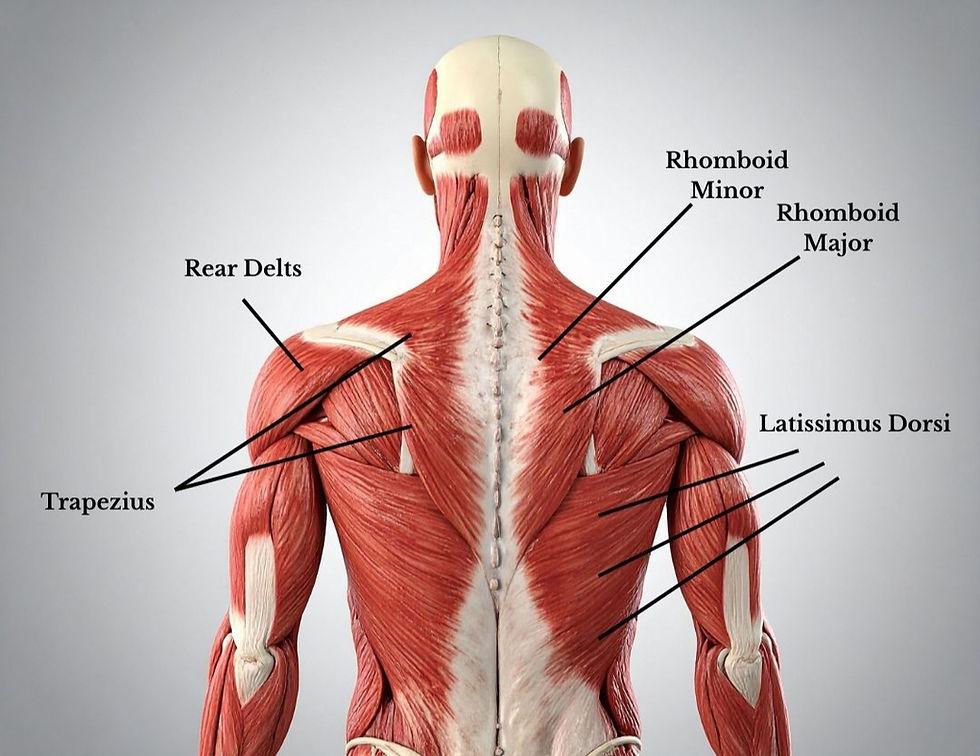
1. Latissimus Dorsi
The latissimus dorsi muscles, commonly called the lats, are large muscles extending across the sides of your back. They help move your upper arms toward and behind your torso.
During the chest supported row, your lats contribute when you pull the handles toward your body, particularly when your elbows travel closer to your sides.
Strengthening these muscles can help improve your performance in rowing, pull-ups, and other pulling exercises.
2. Rhomboids
The rhomboid muscles are located between your shoulder blades. They help draw the shoulder blades toward the spine. When you perform a rowing movement, the rhomboids contribute to the controlled movement of the shoulder blades. A properly performed row can help strengthen these important upper-back muscles.
3. Trapezius
The trapezius is a large muscle extending across the upper back and neck region. Its middle fibers assist with pulling the shoulder blades together, while other portions help control shoulder blade movement. Chest supported rows are especially useful for training the middle trapezius.
Secondary Muscles
The exercise also involves several supporting muscles.
| Muscle | Role during the exercise |
|---|---|
| Rear deltoids | Assist with moving the upper arms backward |
| Biceps brachii | Help bend the elbows |
| Brachialis | Supports elbow flexion |
| Brachioradialis | Assists the pulling movement |
| Teres major | Helps draw the upper arm backward |
| Rotator cuff muscles | Help stabilize the shoulders |
The contribution of each muscle changes depending on the machine design, handle position, and direction of your elbows.
For example, pulling with your elbows near your sides generally emphasizes shoulder extension, while a wider elbow position increases the demand on several upper-back and rear-shoulder muscles.
Neither technique completely isolates a single muscle group.
How to Use a Chest Supported Row Machine: Step-by-Step Guide
Learning how to operate the machine correctly is important for both comfort and exercise effectiveness.
Follow these instructions before increasing the weight.
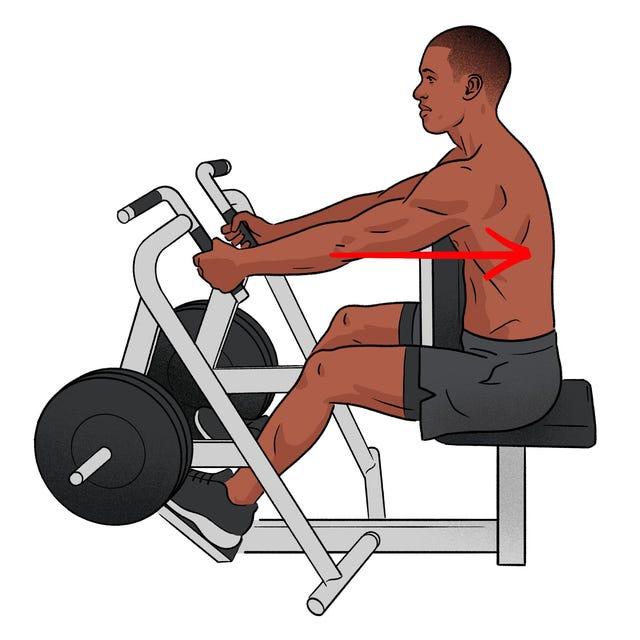
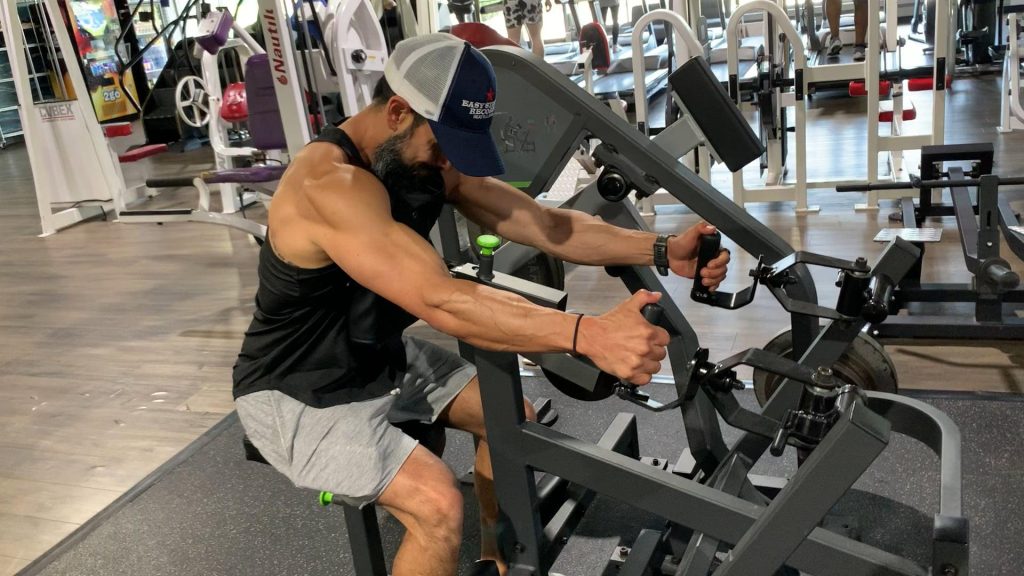
Step 1: Adjust the seat height
Sit on the machine and place your chest comfortably against the support pad. Adjust the seat so the handles are within easy reach and your shoulders are in a natural position. On many machines, the handles will sit around the lower-chest to shoulder region.
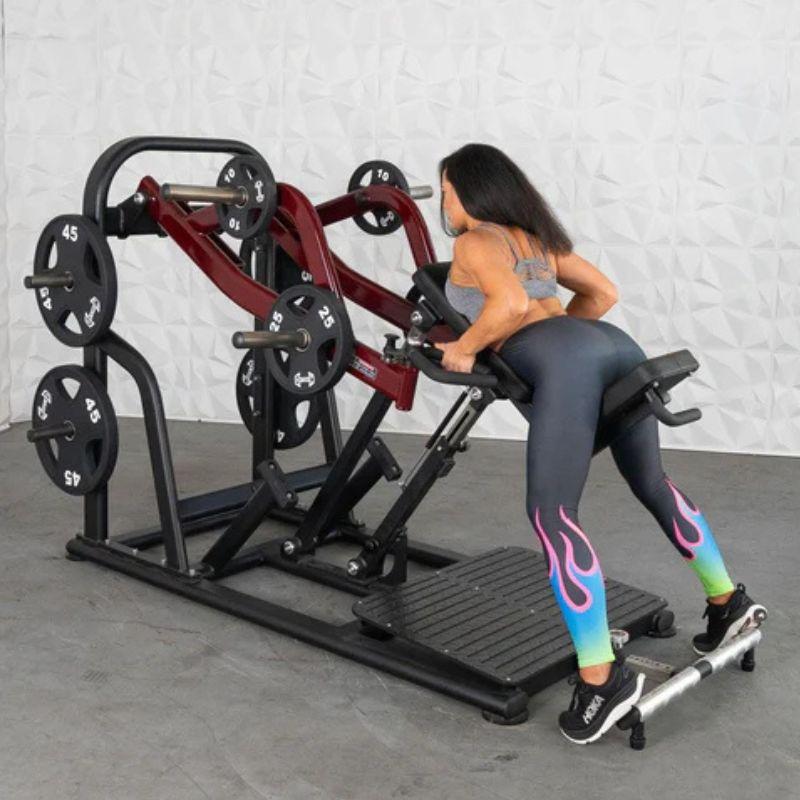
Step 2: Choose your grip
Hold the handles firmly with your palms facing each other if a neutral-grip option is available. Keep your wrists straight. Avoid squeezing the handles harder than necessary.
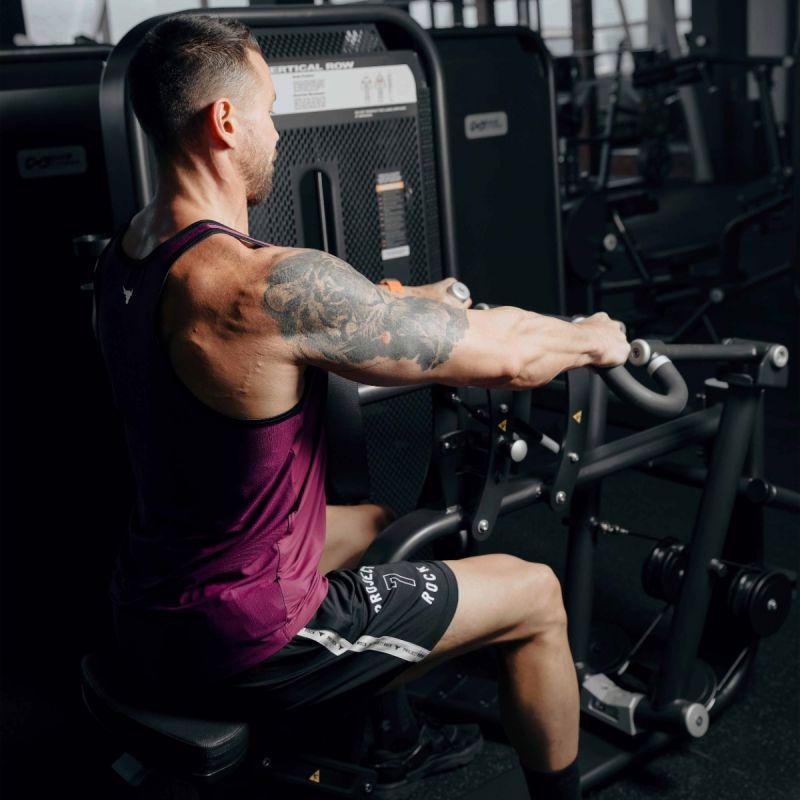
Step 3: Establish your starting position
Keep your feet stable, chest against the pad, and head aligned with your torso. Extend your arms comfortably without forcing your shoulders into an exaggerated stretch.
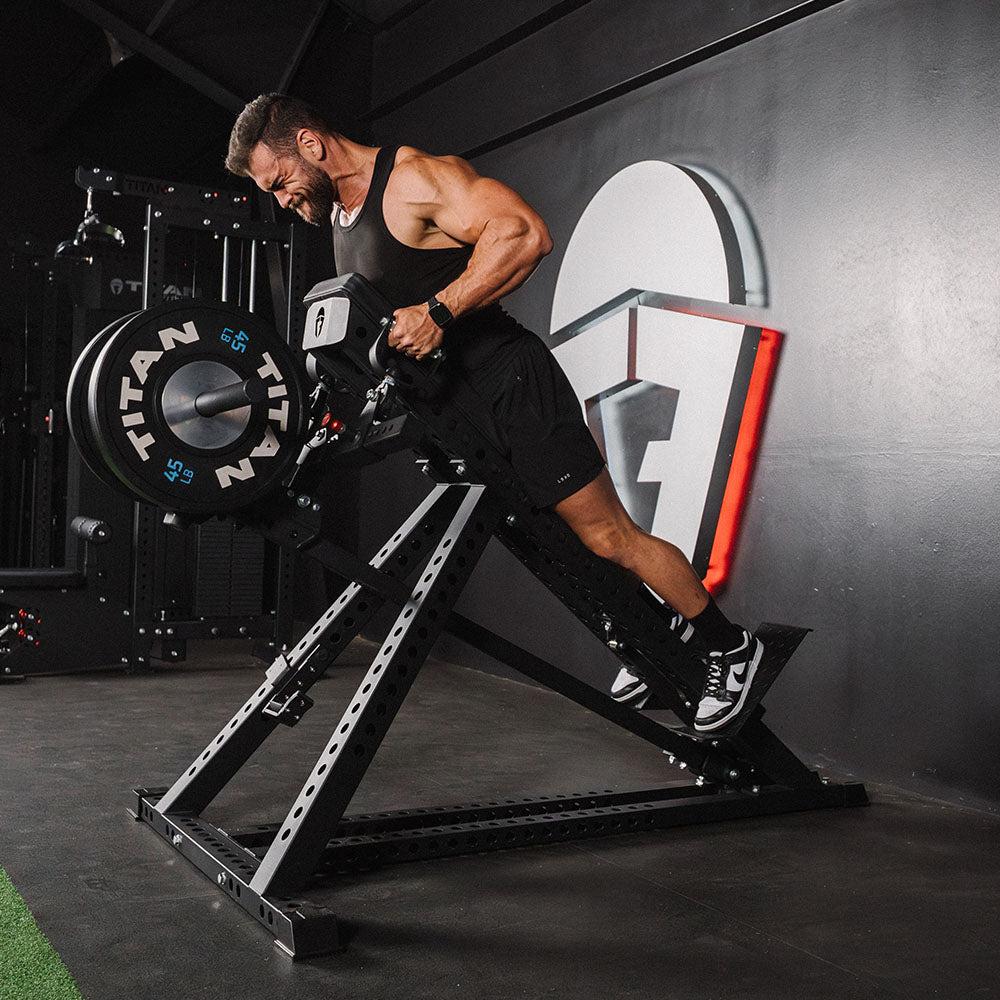
Step 4: Pull the handles toward your torso
Move your elbows backward in a smooth motion. Keep your chest in contact with the pad and avoid throwing your upper body backward. Exhale naturally as you pull.
Step 5: Finish the pull without forcing it
Bring the handles toward your torso as far as your comfortable range allows. Your shoulder blades may move closer together, but do not force them into an extreme position or shrug your shoulders.
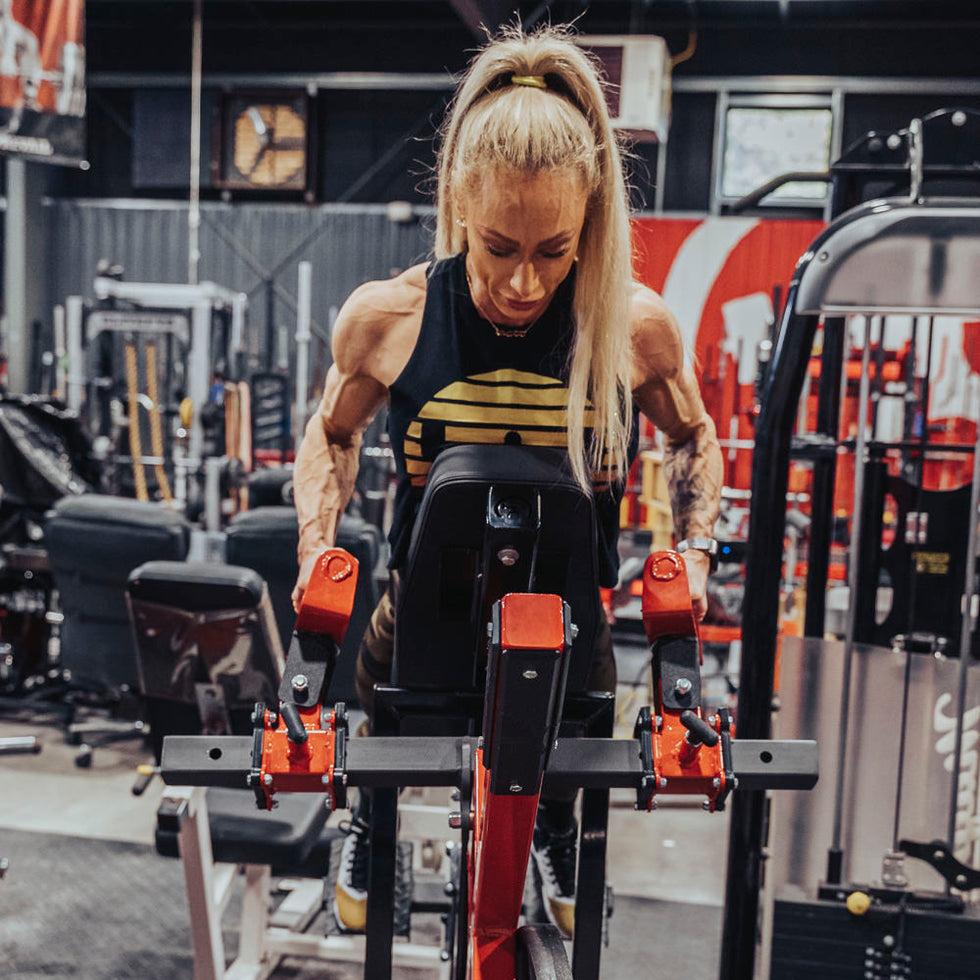
Step 6: Slowly return and repeat
Allow your elbows to straighten gradually while controlling the resistance. Avoid letting the weights slam down. Repeat for your planned number of repetitions.
How Many Repetitions Should Beginners Perform?
A beginner can start with two sets of 10–12 controlled repetitions using a manageable weight.
Rest for approximately 60–120 seconds between sets.
You should feel your back muscles working while maintaining control of the handles.
If you cannot complete the repetitions without lifting your chest from the pad, reduce the resistance.
A machine setting that allows steady repetitions is usually more useful than selecting a heavy weight that disrupts your technique.
Benefits of Using a Chest Supported Row Machine
The chest supported row offers several practical benefits for strength training.
1. Reduces Lower-Back Stabilization Demand
During bent-over rows, your lower-back muscles must help maintain your torso position.
The chest supported row machine provides external support, reducing this stabilization requirement.
This can make it a useful option when your lower-back muscles are already fatigued from exercises such as deadlifts or squats.
However, reduced stabilization demand does not mean the machine eliminates all lower-back stress or guarantees that the movement will be pain-free.
2. Helps Limit Excessive Momentum
Some people use their entire body to move the weight during traditional rows.
This can happen when the load is too heavy.
With chest support, it becomes harder to use large torso movements to help complete a repetition.
As a result, the exercise encourages a more controlled pulling movement.
3. Supports Upper-Back Muscle Development
Chest supported rowing exercises train the muscles responsible for pulling your arms backward and controlling your shoulder blades.
With consistent resistance training, appropriate recovery, and gradual increases in difficulty, the exercise can contribute to back muscle growth.
4. Makes Technique Easier to Repeat
The machine’s support and guided movement can help beginners maintain a consistent position.
This makes it easier to compare repetitions and monitor progress between workouts.
However, beginners should still learn how to adjust the equipment correctly.
5. Offers Different Grip Options
Many machines include several handle positions.
You may be able to choose between:
- Neutral grip
- Wide overhand grip
- Narrow grip
- Single-arm rowing
- Different handle heights
These options make the machine useful for different training preferences and goals.
6. Works for Different Training Levels
Beginners can use lighter resistance to develop good technique.
Experienced lifters can use heavier loads, additional sets, or different rowing variations to increase the challenge.
The resistance can also be adjusted without changing the basic exercise.
Different Types of Chest Supported Row Machines
Not every machine looks or feels the same.
Understanding the differences can help you choose suitable equipment at the gym.
Plate-Loaded Chest Supported Row Machine
This machine uses removable weight plates to create resistance.
It commonly features a large chest pad and one or two independent handles.
Plate-loaded machines are popular in commercial gyms because users can adjust the resistance in small or large increments, depending on the available plates.
Some models allow each arm to work independently.
Selectorized Chest Supported Row Machine
A selectorized machine uses a weight stack with an adjustment pin.
You change the resistance by moving the pin into the desired weight setting.
This design is convenient because you do not need to load or remove plates.
It can be particularly useful for beginners and people performing multiple sets with different resistance levels.
Chest Supported T-Bar Row Machine
A chest supported T-bar row machine generally includes an angled chest support and a lever or bar connected to a resistance system.
The exercise follows a rowing pattern similar to other chest-supported machines.
However, the angle and handle position can change how the movement feels.
Some T-bar machines offer a wide grip, while others use a narrower neutral-grip handle.
Iso-Lateral Chest Supported Row Machine
Iso-lateral machines allow each arm to move independently.
This makes it possible to perform both-arm or single-arm repetitions, depending on the design.
Such machines can be useful when you want to compare how each side performs.
However, a small strength difference between your arms is common and does not automatically indicate an injury.
Chest Supported Row Machine vs. Seated Cable Row
Both exercises train the back using a pulling movement, but the equipment and stabilization demands are different.
| Feature | Chest supported row machine | Seated cable row |
|---|---|---|
| Chest support | Usually provided | Usually absent |
| Resistance | Weight stack or plates | Cable weight stack |
| Body stabilization | Lower demand | Greater torso control needed |
| Movement path | Often guided | More freedom of movement |
| Grip options | Depends on machine | Depends on attachments |
| Beginner suitability | Generally beginner-friendly | Generally beginner-friendly |
| Main muscles | Lats, rhomboids, traps | Lats, rhomboids, traps |
The best exercise depends on your preferences, available equipment, and training goals.
For someone who wants to minimize torso movement, the chest supported machine may be a convenient choice.
Someone who prefers a less restricted pulling path may enjoy the seated cable row.
Both exercises can contribute to a well-rounded back workout.
Chest Supported Row Machine vs. Bent Over Row
Another common comparison is between the chest supported row machine and the traditional bent-over barbell row.
Both exercises train the back, but they place different demands on the body.
During bent-over rows, you must maintain a hip-hinge position while holding the barbell. Your lower back, hips, and core work to stabilize your torso.
The chest supported version reduces this stabilization demand because the machine supports much of your upper-body weight.
| Comparison | Chest supported row | Bent-over barbell row |
|---|---|---|
| Primary focus | Back muscle training | Back training with substantial torso stabilization |
| Lower-back demand | Generally lower | Generally higher |
| Balance requirement | Low | Moderate |
| Momentum control | Easier to limit | Requires more discipline |
| Equipment | Dedicated machine | Barbell and plates |
| Exercise versatility | Machine-dependent | Greater freedom of movement |
Neither exercise is automatically superior for everyone.
A person who wants to develop hip-hinge strength and back stabilization may benefit from bent-over rows.
Someone who wants to focus on back training after performing heavy lower-body exercises may prefer the chest supported machine.
Best Grip for the Chest Supported Row Machine
The position of your hands can change your elbow path, comfort, and muscle emphasis.
There are three common grip variations.
Neutral Grip
The neutral grip means your palms face each other.
This is a practical starting point for many beginners because it often allows the elbows to remain relatively close to the torso.
To perform this variation, hold the parallel handles and pull your elbows backward without excessively flaring them outward.
It generally provides a comfortable position for training the lats and middle-back muscles.
Wide Overhand Grip
With a wide overhand grip, your palms face downward and your hands are farther apart.
Your elbows may naturally move outward as you pull.
This variation often places greater emphasis on the rear deltoids and muscles involved in shoulder blade retraction.
Avoid forcing your elbows into a position that causes shoulder discomfort.
Narrow Grip
A narrow grip keeps your hands closer together.
Depending on the machine, this may allow your elbows to travel near your ribs.
A narrower grip can be useful when you want to focus on pulling the upper arms backward.
However, it is not automatically better for lat development than every other grip.
Which Grip Should You Choose?
| Training goal | Grip to try | Important tip |
|---|---|---|
| General back development | Neutral grip | Keep the movement controlled |
| Upper-back emphasis | Wider overhand grip | Allow a comfortable elbow flare |
| Lat emphasis | Neutral or narrow grip | Pull elbows toward your hips |
| Beginner training | Comfortable neutral grip | Prioritize consistent technique |
| Single-arm training | Independent handle | Avoid twisting your torso |
The best grip is one that allows you to train the intended muscles through a comfortable range of motion without joint pain.
Common Chest Supported Row Machine Mistakes and How to Fix Them
Even experienced gym members sometimes make mistakes while using rowing machines.
Learning to recognize these issues can improve your workouts.
1. Using Too Much Weight
Selecting excessive resistance is one of the most common training mistakes.
When the weight becomes too heavy, people may shorten the movement, lift their chest away from the support pad, or pull the handles using momentum.
How to fix it: Reduce the load until you can perform every repetition with consistent control. Increase the resistance gradually as your strength improves.
2. Lifting Your Chest Away From the Pad
Your chest should generally remain against the support throughout the rowing movement.
Lifting your torso reduces the benefit of external support and changes how the resistance is handled.
How to fix it: Adjust the chest pad and seat before starting. Choose a resistance that allows you to maintain contact with the support during the entire repetition.
3. Shrugging Your Shoulders
Some people raise their shoulders toward their ears when pulling the handles backward.
This can make the movement feel uncomfortable and change which muscles receive the greatest emphasis.
How to fix it: Maintain a natural shoulder position. Avoid deliberately shrugging during every repetition.
4. Moving the Handles Too Quickly
Rapid pulling and releasing often make it difficult to maintain a consistent movement.
The weight stack may also slam against the machine.
How to fix it: Use a steady pulling motion and a controlled return. For example, you can take approximately one to two seconds to pull and two seconds to return, without treating these timings as strict requirements.
5. Bending Your Wrists Excessively
Your wrists should remain relatively straight while gripping the handles.
Excessive wrist bending can make the exercise uncomfortable.
How to fix it: Keep your hands aligned with your forearms and avoid using your wrists to curl the handles toward you.
6. Using an Incomplete Range of Motion
Performing very short repetitions may limit the amount of training performed through the available movement range.
How to fix it: Allow your arms to extend comfortably at the beginning of each repetition and pull backward as far as your shoulders permit without pain.
Do not force an exaggerated stretch or pull the handles farther than your natural shoulder mobility allows.
Quick Troubleshooting Table
| Problem | Possible cause | Suggested correction |
|---|---|---|
| Mostly feeling the biceps | Pulling primarily with the arms | Focus on moving the elbows backward |
| Chest lifts from pad | Excessive resistance or incorrect setup | Reduce weight and adjust support |
| Shoulder discomfort | Uncomfortable grip or pulling angle | Try another handle and reduce range |
| Weight stack slams | Poor control | Slow the return |
| One arm works harder | Strength difference or uneven positioning | Check setup and try lighter independent-arm rows |
| Neck discomfort | Head position or excessive shrugging | Keep neck aligned and shoulders relaxed |
Persistent pain should not be ignored. Stop the exercise and seek advice from an appropriately qualified healthcare professional when needed.
How Much Weight Should You Use?
There is no single correct starting weight for a chest supported row machine.
The appropriate resistance depends on your strength, exercise experience, machine design, and intended repetition range.
The number displayed on one machine may not represent an equivalent level of resistance on another machine because lever lengths, pulley systems, and other mechanical characteristics can differ.
A Practical Weight Selection Method
Begin with a light resistance and perform 10 controlled repetitions.
At the end of the set, ask yourself whether you could complete several more repetitions with good form.
If the exercise feels extremely easy, increase the resistance slightly.
If you struggle to maintain contact with the pad or cannot control the handles, reduce the weight.
For general muscle-building training, a useful starting target is to finish most sets feeling that you could perform approximately one to three additional repetitions with good technique.
This is often called repetitions in reserve, or RIR.
You do not need to reach complete muscular failure on every set to make progress.
Chest Supported Row Machine Sets and Reps
The number of sets and repetitions should match your training goals and experience.
| Training goal | Suggested sets | Repetitions | Rest period |
|---|---|---|---|
| Beginner technique | 2 | 10–12 | 60–120 seconds |
| General fitness | 2–3 | 10–15 | 60–120 seconds |
| Muscle development | 3–4 | 8–12 | 90–180 seconds |
| Strength emphasis | 3–4 | 5–8 | 2–3 minutes |
| Muscular endurance | 2–3 | 15–20 | 60–90 seconds |
These are practical starting ranges rather than mandatory rules.
The American College of Sports Medicine’s updated 2026 resistance-training guidance emphasizes consistency, gradual progression, and training major muscle groups at least twice weekly. Its recommendations also indicate that different training methods can be effective rather than requiring one perfect exercise prescription. ACSM+1
How to Apply Progressive Overload?
Progressive overload means gradually increasing the challenge as your body becomes stronger.
For example, suppose you can currently perform three sets of eight repetitions using a particular machine setting.
You can work toward performing three sets of 12 repetitions with the same resistance.
Once you consistently complete all 12 repetitions with good form, increase the weight by the smallest suitable increment and return to the lower end of your repetition range.
This method is commonly called double progression.
Avoid increasing the load simply because you feel pressure to lift more than someone else at the gym.
Beginner Chest Supported Row Workout Plan
A beginner can include the chest supported row in a basic back-training routine alongside other pulling exercises.
The following is an example workout.
| Exercise | Sets | Reps |
|---|---|---|
| Lat pulldown | 3 | 10–12 |
| Chest supported row machine | 3 | 10–12 |
| Seated cable row | 2 | 10–12 |
| Reverse pec deck | 2 | 12–15 |
| Dumbbell biceps curl | 2 | 10–12 |
Perform a general warm-up before training and begin the first rowing exercise with a lighter set.
Beginners do not need to complete every exercise listed if the session creates excessive fatigue.
Two or three pulling exercises may be sufficient when starting.
Try to leave adequate recovery time between demanding workouts targeting the same muscles.
Four-Week Progression Example
ILLUSTRATIVE BEGINNER PLAN
| Week 1 | 2 sets of 10 repetitions; learn the technique |
| Week 2 | 2 sets of 12 repetitions with the same resistance |
| Week 3 | 3 sets of 10 repetitions if recovery is adequate |
| Week 4 | 3 sets of 12 repetitions, or increase resistance slightly if ready |
Progress only when the current workload is comfortable and your technique remains consistent.
Best Chest Supported Row Alternatives
Not every gym has a dedicated chest supported row machine.
Fortunately, several alternative exercises train similar muscle groups.
1. Incline Bench Dumbbell Row
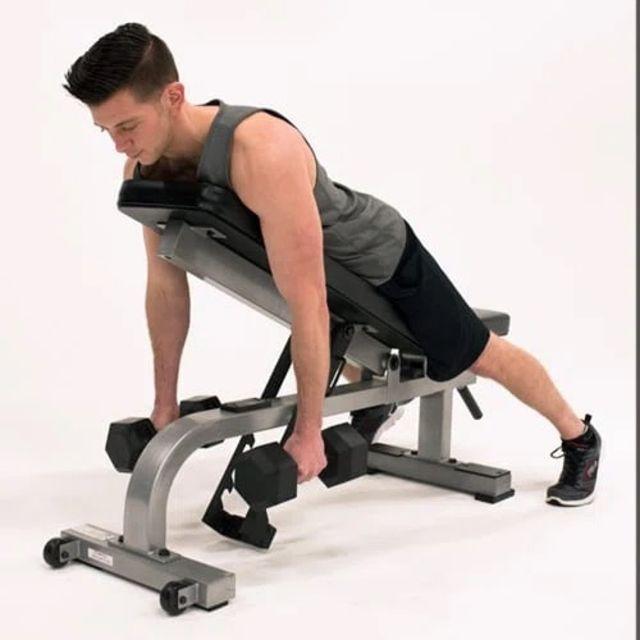
This variation uses an adjustable incline bench and a pair of dumbbells.
Set the bench to a comfortable incline, often around 30–45 degrees, and position your chest against it.
Hold one dumbbell in each hand and pull your elbows backward while maintaining contact with the bench.
Lower the weights gradually.
This is one of the closest substitutes when a chest-supported machine is unavailable.
2. Seated Cable Row
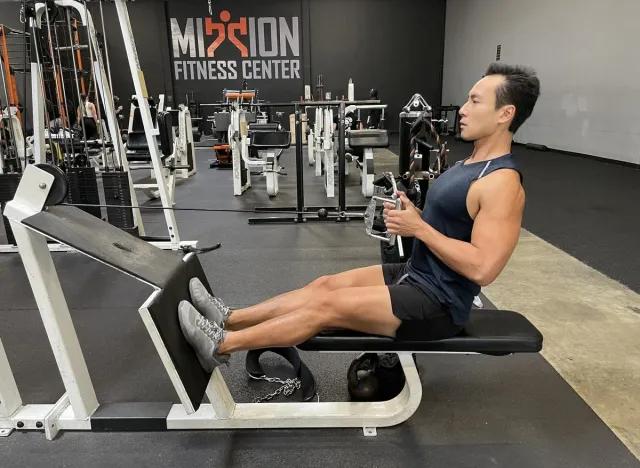
Sit at a cable-row station and hold an appropriate attachment.
Keep your torso steady while pulling the handle toward your abdomen or lower chest, depending on the setup.
Return the cable under control.
This exercise provides a similar horizontal pulling pattern, although it requires greater torso stabilization when no chest support is available.
3. Single-Arm Dumbbell Row
Place one hand on a sturdy bench and use your other hand to hold a dumbbell.
Keep your torso stable and pull the weight toward your hip.
This exercise allows each arm to work independently and is a useful choice when you do not have access to a rowing machine.
4. Chest Supported T-Bar Row
If your gym has an angled T-bar machine with a chest pad, you can use it as an alternative.
The movement is similar to a machine row, although the path and grip options may differ.
5. Resistance Band Row
For people training at home, a resistance band secured to an appropriate anchor can provide a horizontal pulling exercise.
Ensure the anchor is stable and the band is free from damage before exercising.
Resistance band rows can be useful for general strength training, although the resistance changes as the band stretches.
Also Read:
- Black Tea vs Green Tea
- Eye Examination for Cataract
- How Can I Get Rid of Cellulite on My Legs
- Best Ayurvedic Toothpaste in India
- How to Use a Continuous Glucose Monitor for Weight Loss
Is the Chest Supported Row Machine Good for Beginners?
Yes. The chest supported row machine is generally suitable for beginners when the equipment fits their body and the resistance is appropriately selected.
The machine supports the torso, helps limit excessive body swinging, and allows relatively straightforward resistance adjustments.
However, beginners should still learn correct positioning and avoid assuming that a guided machine automatically guarantees safe technique.
A beginner should focus on learning a comfortable pulling path, maintaining a stable torso, controlling the return, and gradually increasing resistance.
If you are unfamiliar with the equipment, a qualified gym instructor can demonstrate the correct adjustments for your particular machine.
Is the Chest Supported Row Machine Good for Lower-Back Problems?
A chest-supported row may be more comfortable than an unsupported bent-over row for some people because the chest pad reduces the work needed to stabilize the torso.
However, this does not mean it is appropriate for every person experiencing back pain.
The machine does not eliminate all spinal loading, and the exercise can still cause discomfort if the support position, resistance, or movement is unsuitable.
People with existing back injuries, persistent symptoms, or recent surgery should seek individualized advice from a qualified healthcare professional before performing unfamiliar exercises.
The chest supported row is a strength-training exercise, not a medical treatment for back pain.
How to Include the Machine in Your Weekly Training Routine?
The chest supported row can fit into several types of workout routines. During a full-body workout, it can serve as your primary horizontal pulling movement. During an upper-body workout, it can be combined with chest presses, shoulder exercises, and vertical pulling movements.
During a dedicated back workout, it can be used alongside exercises such as lat pulldowns and other rows. The key is to balance your training volume with adequate recovery. For example, performing a chest supported row twice per week may be suitable for someone following a general strength-training routine. You do not need to train the same exercise every day to obtain results.
Frequently Asked Questions About the Chest Supported Row Machine
What muscles does the chest supported row machine work?
The chest supported row machine primarily trains the latissimus dorsi, rhomboids, and middle trapezius muscles. It also involves the rear deltoids, biceps, brachialis, and other supporting muscles. The exact emphasis depends on your grip, elbow position, and machine design. Keeping your chest against the pad helps reduce the need for lower-back stabilization while performing the movement.
Is the chest supported row better than a barbell row?
Neither exercise is universally better. The chest supported row is useful when you want to train your back while reducing the need for torso stabilization. Barbell rows require more control from the hips, core, and lower back. Both exercises can help develop back strength and muscle. Your choice should depend on your training goals, experience, comfort, and available equipment.
Should I use a wide or narrow grip?
Both grip styles can be effective. A narrower neutral grip often allows the elbows to remain closer to the torso, while a wider overhand grip may increase the emphasis on the upper back and rear shoulders. Use a grip that feels comfortable and allows smooth, controlled repetitions. Avoid forcing your shoulders into an uncomfortable position simply to target a particular muscle.
Is the chest supported row machine good for building muscle?
Yes. The machine can help develop back muscles when included in a consistent resistance-training program. For muscle growth, gradually increase the difficulty of your workouts while maintaining proper technique. Adequate nutrition, sleep, and recovery also contribute to results. The machine does not have a unique muscle-building advantage over every other rowing exercise, but it can be an effective option.
Can I use the chest supported row machine every day?
Daily training is generally unnecessary for most people. Your back muscles need sufficient recovery after demanding workouts. Training the exercise two or three times per week may be appropriate depending on your overall program. The total number of challenging sets, the resistance used, and your recovery capacity matter more than simply performing the movement as frequently as possible.
Why do I feel the exercise in my biceps instead of my back?
Your biceps naturally assist during rowing exercises, so feeling them work is normal. However, if they become tired long before your back muscles, check your grip, resistance, and pulling technique. Try reducing the weight and focusing on moving your elbows backward rather than simply curling the handles toward your body. Using lifting straps may help when grip fatigue is limiting a set.
What is the difference between a chest supported row and a seated row?
A chest supported row uses a pad to support your torso while you pull the handles backward. A standard seated cable row often requires you to stabilize your torso without chest support. Both exercises train similar back muscles. The chest supported version may reduce lower-back stabilization demands, while the cable version generally allows more freedom in the movement path.
Does the chest supported row work the rear deltoids?
Yes. The rear deltoids assist in moving your upper arms backward during rowing. A wider elbow position can increase their involvement, although the exercise also trains several other back muscles. If rear-shoulder development is a major goal, you may combine rows with exercises such as reverse flyes or reverse pec-deck movements.
Can chest supported rows replace lat pulldowns?
Chest supported rows and lat pulldowns train overlapping muscles, but they use different pulling directions. Rows are primarily horizontal pulling exercises, while lat pulldowns involve vertical pulling. Including both movements in a balanced workout can help train the back through different movement patterns. You do not necessarily need both exercises in every workout, but they complement each other.
How do I know whether I am using the machine correctly?
Your chest should remain comfortably against the support pad, your feet should be stable, and your wrists should stay relatively straight. Pull the handles backward without jerking your torso or shrugging excessively. You should be able to control the weight during both the pulling and returning phases. If your technique changes significantly as you perform more repetitions, consider reducing the resistance.
Final Thoughts
The chest supported row machine is a useful exercise for developing the muscles of your back while reducing the need for lower-back stabilization. Its padded support, adjustable resistance, and different grip options make it suitable for many beginners and experienced lifters.
To get the most from the exercise, adjust the machine correctly, use a comfortable grip, choose a manageable resistance, and maintain control throughout every repetition.
You do not need to lift the heaviest available weight to make progress. Consistent training, appropriate exercise technique, and gradual increases in difficulty are more important.
When combined with other pulling movements and a balanced strength-training program, chest supported rows can help you build a stronger, more developed back.