


Cellulite on your legs can be frustrating, especially when you notice small dimples on your thighs, knees, or the back of your legs. You may have tried different creams, massages, or exercises without seeing the smooth skin you expected.
If you are wondering, “How can I get rid of cellulite on my legs?”, the first thing to understand is that cellulite is extremely common. It can appear on people of different ages, weights, and fitness levels. Even people who exercise regularly and maintain a healthy weight can have cellulite.
The good news is that some lifestyle changes, skin-care products, and professional treatments can make cellulite less noticeable.
However, there is an important difference between reducing cellulite and removing it permanently. No home treatment has been proven to eliminate cellulite completely. Certain medical procedures may produce longer-lasting improvements, but results vary.
This guide explains what causes cellulite, how to reduce its appearance naturally, which exercises may help, and what to expect from medical treatments.
What Is Cellulite on Your Legs?
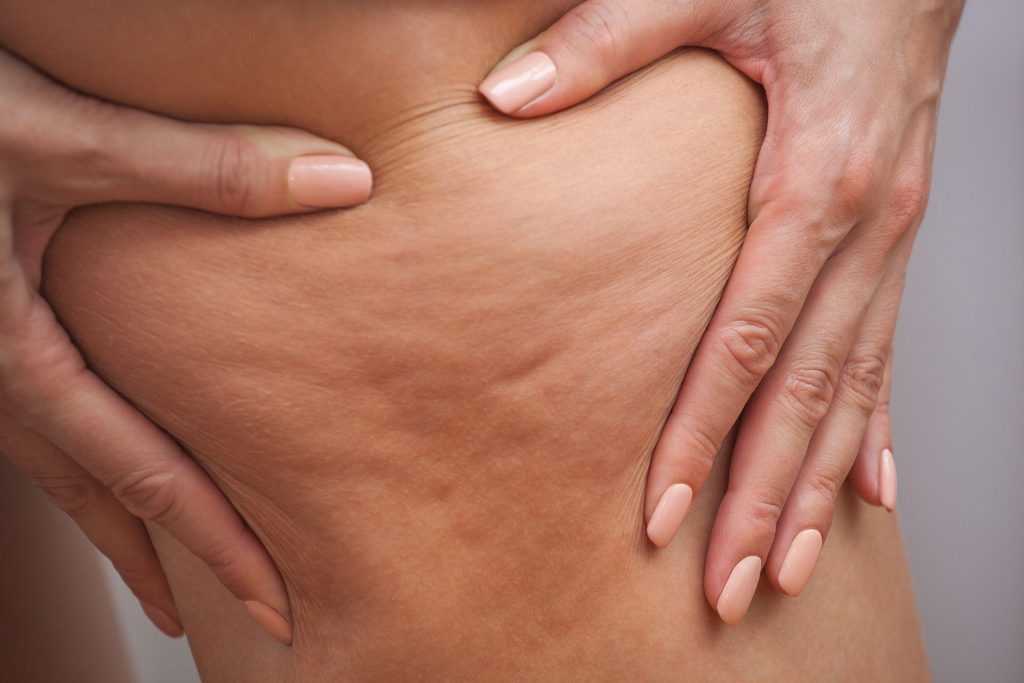
Cellulite is a common skin condition that makes the surface of your skin look uneven, bumpy, or dimpled. It often resembles an orange peel or cottage cheese.
It usually appears in areas where fat naturally collects, including the thighs, buttocks, hips, and abdomen.
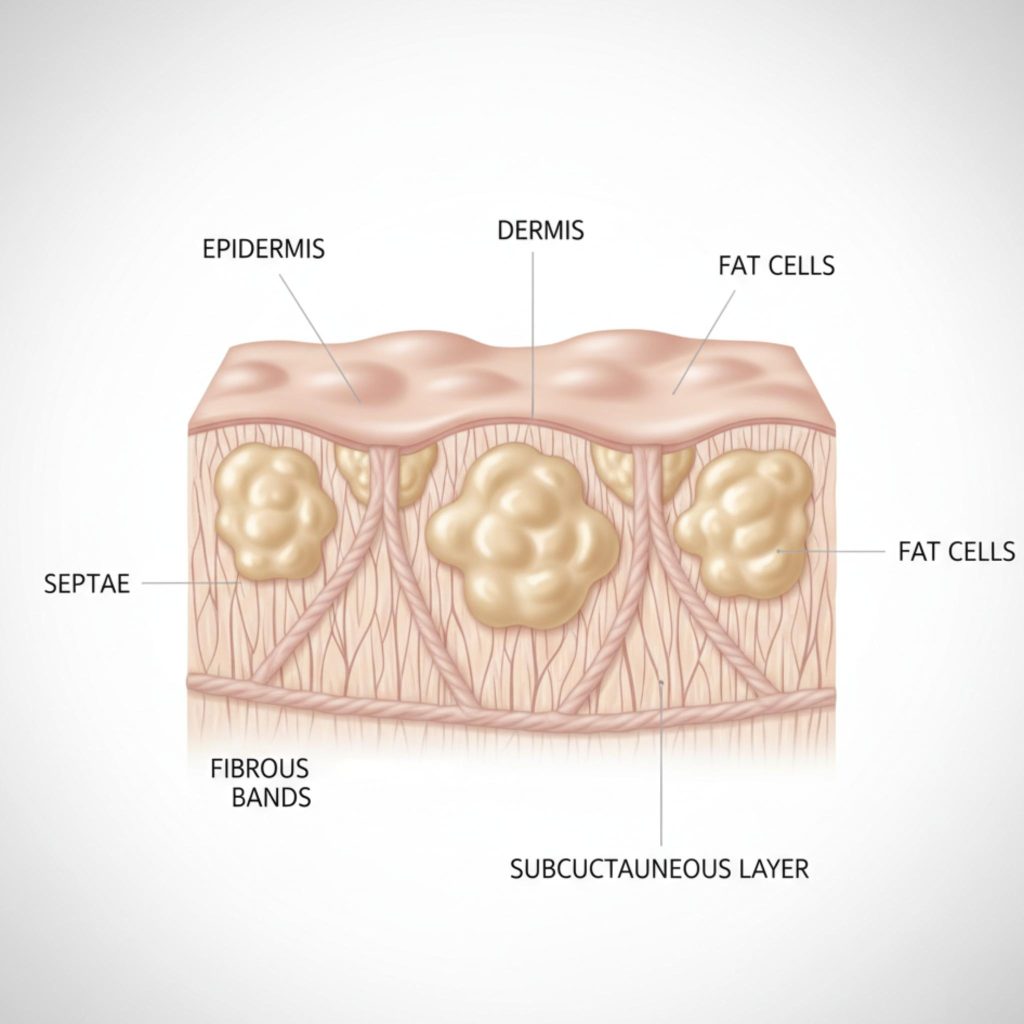
Cellulite develops because of the arrangement of fat, skin, and connective tissue beneath the skin’s surface.
Small bands of connective tissue attach the skin to deeper structures. These bands can pull certain areas of the skin downward while the surrounding fat pushes upward. This creates the uneven appearance associated with cellulite.
According to the Mayo Clinic, cellulite is a harmless skin condition that usually does not require medical treatment.
What are the common signs of cellulite?
Cellulite may appear as:
- Small dimples on the thighs or buttocks
- Uneven or lumpy skin
- An orange-peel appearance
- Dents that become more visible when sitting or squeezing the skin
- Changes in skin texture that become more noticeable with age
Mild cellulite may only appear when the skin is compressed. More noticeable cellulite can be visible while standing.
Cellulite is not the same as a skin infection called cellulitis. Cellulitis typically involves redness, warmth, pain, or swelling and may need prompt medical treatment.
Why Do I Have Cellulite on My Legs?
Understanding the causes of cellulite can help you choose realistic treatments.
1. Genetics
Genetics can influence your skin thickness, connective tissue structure, body fat distribution, and tendency to develop cellulite.
If close family members have cellulite, you may be more likely to develop it.
2. Hormonal factors
Hormones influence fat distribution and skin structure. Cellulite commonly appears after puberty and may change during other hormonal stages of life.
3. Natural body fat distribution
Fat cells beneath the skin contribute to cellulite’s appearance. However, cellulite is not simply a sign of excess body fat.
People with low body fat can also have noticeable cellulite.
4. Aging and reduced skin elasticity
As people get older, their skin may become thinner and lose some firmness.
This can make dimples more visible, particularly on the thighs and buttocks.
5. Changes in body weight
Weight gain can make cellulite more noticeable in some people. Losing excess weight may reduce its appearance, but loose skin following weight loss may sometimes make dimpling more visible.
6. Lifestyle factors
Physical inactivity, smoking, and other lifestyle factors may influence skin health, muscle tone, or the appearance of cellulite.
Still, cellulite can occur even when someone follows healthy habits.
Can You Completely Get Rid of Cellulite on Your Legs?
The short answer is that cellulite cannot reliably be eliminated permanently, especially with home remedies.
Exercise may build the muscles beneath your skin, making the legs look firmer. Skin-care products can sometimes improve the appearance of the surface. Medical treatments may target the connective tissue bands responsible for dimpling.
The effectiveness depends on your skin, the severity of cellulite, and the treatment selected.
Here is a quick comparison.
| Treatment | What you can realistically expect |
|---|---|
| Strength training | May improve muscle definition and appearance |
| Balanced diet | Supports general health and weight management |
| Moisturizing | Temporarily improves dry skin’s appearance |
| Retinol cream | Modest improvement for some people after months |
| Massage | Temporary cosmetic improvement |
| Dry brushing | No convincing evidence of lasting cellulite reduction |
| Radiofrequency treatment | Possible improvement, often requiring sessions |
| Laser treatment | Can improve dimpling in selected patients |
| Subcision | Can provide longer-lasting improvement in targeted dimples |
The American Academy of Dermatology explains that certain procedures have more convincing evidence than many products sold for home use.
12 Ways to Reduce Cellulite on Your Legs
The following methods include home care, exercise, and professional treatment options. Some may improve the appearance of cellulite, while others mainly support overall skin health.
1. Start Strength Training to Build Leg Muscles
Strength training is one of the most practical ways to improve the overall appearance of your legs.
Exercises that build the thighs, glutes, and hamstrings can improve muscle definition and make the skin look firmer.
However, exercise cannot directly break the fibrous bands responsible for cellulite.
Step-by-step guide:
- Choose three days each week for lower-body strength training.
- Begin with bodyweight exercises such as squats and glute bridges.
- Perform each movement slowly with proper technique.
- Increase repetitions or resistance gradually as you become stronger.
- Allow recovery time between challenging workouts.
- Continue consistently for several months.
Beginners can start with 15–20 minutes per session.
Strength training is beneficial even if it does not significantly change your cellulite. It can improve mobility, balance, and muscle strength.
2. Walk Regularly
Walking is a simple activity that supports cardiovascular health, circulation, and weight management.
It also works the muscles in your thighs and calves.
If you are searching for how to get rid of cellulite naturally, walking is a sensible addition to your routine. However, there is no convincing evidence that walking alone removes cellulite.
How to begin:
- Start with a comfortable 10–15-minute walk.
- Gradually increase your walking time.
- Include gentle hills if your fitness allows.
- Wear supportive footwear.
- Combine walking with strength training.
You can aim toward 150 minutes of moderate aerobic activity per week, in line with general physical activity recommendations.
This is a health and fitness goal, not a guaranteed cellulite treatment.
3. Follow a Balanced Diet
A nutritious diet supports healthy weight management and helps maintain the tissues that make up your skin.
No specific food has been proven to remove cellulite. Similarly, avoiding one particular food will not make cellulite disappear.
Focus on a variety of nutrient-rich foods.
| Food group | Examples | General benefit |
|---|---|---|
| Protein | Eggs, fish, tofu, lentils, yogurt | Supports muscle maintenance |
| Vitamin C sources | Oranges, guava, strawberries, bell peppers | Supports normal collagen production |
| Vegetables | Broccoli, spinach, carrots | Provides vitamins and minerals |
| Whole grains | Oats, brown rice, whole-wheat bread | Provides fiber and energy |
| Healthy fats | Nuts, seeds, olive oil | Supports normal body functions |
| Water-rich foods | Watermelon, cucumber, tomatoes | Contributes to hydration |
Practical steps:
- Include protein in your main meals.
- Eat a variety of fruits and vegetables.
- Choose whole grains regularly.
- Limit excessive consumption of ultra-processed foods.
- Avoid crash diets and rapid weight-loss plans.
If you are already at a healthy weight, losing more weight is not necessarily helpful. In some cases, weight loss can make cellulite more visible because of changes in skin firmness.
4. Drink Enough Water
Proper hydration is important for normal skin function and overall health.
Dehydrated skin may look less plump, but drinking extra water has not been shown to eliminate cellulite.
The goal is to stay adequately hydrated rather than force yourself to drink excessive amounts.
Helpful daily habits:
- Drink water regularly throughout the day.
- Increase fluid intake when sweating heavily.
- Include water-rich fruits and vegetables.
- Pay attention to thirst.
- Follow medical advice if you have been prescribed fluid restrictions.
Drinking water is good for your body, but it should not be considered a direct treatment for cellulite.
5. Try a Retinol Body Cream
Retinol is an ingredient used in certain skin-care products.
Some research suggests that a cream containing approximately 0.3% retinol may make cellulite slightly less noticeable by improving skin thickness over time.
Results are generally modest and slow.
The American Academy of Dermatology explains that noticeable improvement may require six months or longer.
Step-by-step application:
- Choose a body product suitable for your skin.
- Test a small area before applying it widely.
- Begin with a low frequency of application, following the product instructions.
- Apply a thin layer to clean, dry skin.
- Use moisturizer if dryness develops.
- Reduce use or stop if significant irritation occurs.
Retinol can cause redness, peeling, and irritation. Avoid applying it to broken skin.
Important: Avoid retinoids during pregnancy or while trying to become pregnant unless your healthcare professional specifically advises otherwise. Ask a clinician about use while breastfeeding.
Retinol creams do not remove the underlying connective tissue bands, and results cannot be guaranteed.
6. Use Moisturizer to Improve Skin Appearance
Moisturizing can make dry skin feel softer and appear smoother.
Although it cannot remove cellulite, it may help improve the overall look of your legs, especially when dryness makes the skin texture more noticeable.
Look for moisturizers containing ingredients such as glycerin, ceramides, or hyaluronic acid.
Simple routine:
- Wash your legs gently.
- Pat your skin dry.
- Apply moisturizer while the skin is slightly damp.
- Massage it gently until absorbed.
- Repeat as needed to manage dryness.
There is no need to buy an expensive product marketed specifically for cellulite if your main goal is moisturization.
7. Consider Gentle Massage for Temporary Improvement
Massage is a popular cellulite treatment at home.
Some people notice that their skin appears smoother immediately after massage. However, this effect is generally temporary.
Massage cannot permanently release the deeper connective tissue bands causing cellulite.
How to massage your legs safely:
- Apply a comfortable amount of moisturizer or massage lotion.
- Begin with light movements over the thighs.
- Use gentle, comfortable strokes.
- Avoid excessive pressure or aggressive rubbing.
- Stop if you experience pain, bruising, or irritation.
Avoid deep massage over swollen, painful, inflamed, or injured areas. People with vascular conditions or suspected blood clots should seek medical advice rather than attempting leg massage.
Massage can be a relaxing self-care activity, but it should not be promoted as a permanent cellulite solution.
8. Maintain a Stable, Healthy Weight
Body weight influences cellulite differently from person to person.
For some people carrying excess body fat, gradual weight reduction may make cellulite less visible.
For others, cellulite remains visible despite weight loss.
One reason is that cellulite is related to connective tissue and skin structure, not only fat.
A sensible weight-management approach includes balanced meals, physical activity, sufficient sleep, and gradual changes rather than extreme dieting.
Avoid attempting rapid weight loss solely to remove cellulite.
9. Try Cycling, Swimming, or Stair Climbing
Cardiovascular activities can complement your strength-training routine.
Cycling works the thighs and glutes, while swimming offers full-body movement with relatively low joint impact.
Stair climbing can also strengthen the lower body. Choose activities based on your health, abilities, and preferences.
These exercises can improve fitness and muscle conditioning, but there is no evidence that one particular activity is uniquely effective at eliminating cellulite.
10. Explore Radiofrequency or Acoustic Wave Therapy
Professional treatments may offer more noticeable improvements than home remedies.
Two options include radiofrequency treatment and acoustic wave therapy.
Radiofrequency treatment uses energy to heat tissue beneath the skin. Some devices combine heat with suction or massage.
Studies suggest that certain patients experience a reduction in the appearance of cellulite, although the changes may be modest and temporary.
Acoustic wave therapy uses a handheld device to deliver sound waves to the treatment area. Several sessions may be necessary.
Both methods can involve multiple appointments, and their effectiveness varies.
A qualified dermatologist can explain whether these treatments are appropriate for your skin and whether the expected benefits justify the cost.
11. Ask About Laser Cellulite Treatment
Certain laser procedures target the fibrous bands beneath the skin that create cellulite dimples.
One example is a minimally invasive laser procedure in which a small fiber is placed beneath the skin.
The laser energy can help release connective tissue bands and may encourage changes in skin thickness.
Some studies report improvements that last a year or longer, but the duration is not the same for everyone.
Possible side effects include bruising, swelling, discomfort, and other procedure-related complications.
Laser treatment should be performed by an appropriately trained medical professional.
12. Consider Subcision for More Noticeable Dimples
Subcision is a medical technique that releases the fibrous bands pulling the skin downward.
It is among the better-supported procedures for treating selected cellulite dimples.
During the procedure, a qualified clinician uses a specialized instrument beneath the skin to release the tight connective tissue.
The skin may then appear smoother because the pulling force has been reduced.
Some studies have reported results lasting two years or longer.
However, subcision is not suitable for every type of cellulite. It also carries risks such as pain, bruising, bleeding, infection, and uneven results.
A dermatologist can determine whether specific dimples are appropriate for treatment.
Can You Get Rid of Cellulite on the Back of Your Thighs?
The back of the thighs is one of the most common places for cellulite.
This area contains fat tissue and connective tissue bands that may create noticeable dimpling.
Exercises such as glute bridges, squats, and hamstring strengthening movements can improve the muscles beneath the skin.
But these movements do not specifically remove cellulite from the back of the thighs.
For people with deeper, clearly defined dimples, a dermatologist may recommend a treatment that targets connective tissue bands directly.
The best option depends on whether the main concern is skin laxity, isolated dimples, or a combination of both.
How Long Does It Take to Reduce Cellulite on Your Legs?
There is no single timeline because the results depend on the treatment and individual factors.
| Method | General timeline | What to expect |
|---|---|---|
| Moisturizer | Immediately after application | Temporary improvement in dry skin appearance |
| Massage | Immediately or within hours | Temporary cosmetic effect |
| Strength training | Several weeks to months | Gradual changes in muscle strength and definition |
| Balanced diet and weight management | Months | Variable appearance changes |
| Retinol cream | Six months or longer | Possible modest reduction in visible dimpling |
| Radiofrequency | After several treatment sessions | Often temporary improvement |
| Laser treatment | Weeks to months, depending on procedure | Potentially longer-lasting improvement |
| Subcision | After healing, with further changes over time | May improve targeted dimples for years |
Do not expect dramatic cellulite reduction within seven days from a cream, drink, massage, or exercise program.
Such claims are not supported by strong medical evidence.
Cellulite Treatments That Usually Do Not Work as Advertised
The market contains many products that promise smooth legs and permanent cellulite removal.
It is important to understand the limitations before spending money.
Dry brushing
Dry brushing involves rubbing the skin with a brush, usually before showering.
It may exfoliate dead skin cells, but there is no convincing evidence that it permanently reduces cellulite.
Aggressive brushing can cause irritation.
Coffee scrubs
Coffee scrubs may temporarily affect the look or feel of the skin through exfoliation and massage.
However, there is insufficient evidence that homemade coffee scrubs treat the underlying causes of cellulite.
Detox drinks
Cellulite is not caused by toxins that need to be flushed from the body.
There is no reliable evidence that detox teas, juices, or cleansing drinks remove cellulite.
Some detox products can cause dehydration or other unwanted effects.
Cellulite supplements
Supplements marketed for cellulite reduction often contain herbal extracts, vitamins, or other ingredients.
According to the American Academy of Dermatology, there is no convincing evidence that supplements reliably reduce cellulite.
Liposuction alone
Liposuction removes fat, but cellulite is not the same as excess fat.
Liposuction alone does not effectively treat the fibrous bands responsible for dimpling and may sometimes make the skin look more uneven.
Tight compression garments
Compression leggings may temporarily change the appearance of the legs while worn.
However, ordinary shapewear has not been proven to eliminate cellulite or permanently change the structure beneath the skin.
Professional Cellulite Treatment: What Should You Ask a Dermatologist?
If home remedies are not giving you the improvement you want, consulting a qualified dermatologist may help.
Before choosing any procedure, ask these questions:
- Is my skin concern definitely cellulite, or could another condition be involved?
- Which treatment is most suitable for my type of dimpling?
- How much improvement is realistic?
- How many sessions might I need?
- How long might the results last?
- What are the risks, side effects, and recovery requirements?
- What is the total cost, including follow-up appointments?
- Do you have experience treating similar skin types and cellulite patterns?
Cosmetic cellulite treatments are usually paid for privately and may not be covered by health insurance.
Be cautious of providers promising permanent removal, guaranteed results, or completely risk-free procedures.
When Should You See a Doctor About Changes in Your Legs?
Ordinary cellulite is usually painless and harmless.
However, not every change in leg texture or appearance is cellulite.
Seek medical evaluation if you experience:
- Sudden swelling, especially in only one leg
- Redness, warmth, or increasing pain
- Fever with skin changes
- A new painful lump
- Rapid or unexplained changes in the appearance of the skin
- Persistent unexplained tenderness or swelling
Sudden one-sided leg swelling or pain can sometimes indicate a blood clot. Seek urgent medical attention, particularly if symptoms occur with chest pain or shortness of breath.
These symptoms should not be managed with cellulite creams or massage.
Also Read:
Common Mistakes to Avoid When Trying to Reduce Cellulite
Many people spend time and money on treatments that cannot deliver the results advertised.
Avoid these common mistakes.
Expecting cellulite to disappear after a few workouts: Building muscle takes time, and even strong muscles do not guarantee cellulite-free skin.
Buying products with permanent-removal claims: Most creams cannot change the underlying connective tissue structure.
Using harsh massage tools: Aggressive rubbing may cause bruising or irritation without improving cellulite.
Following extreme diets: Rapid weight loss can affect health and may sometimes make dimpling more noticeable.
Comparing your legs with edited photographs: Lighting, posture, filters, and image editing can dramatically change how skin texture appears.
Ignoring other medical symptoms: Pain, redness, warmth, or sudden swelling should not automatically be attributed to cellulite.
Frequently Asked Questions
How can I get rid of cellulite on my legs naturally?
You can try strength training, regular walking, balanced nutrition, appropriate hydration, and basic skin care. These habits may improve muscle tone, skin appearance, and overall health. However, no natural method has been proven to permanently eliminate cellulite. Results differ from person to person, and some people may notice little change despite consistent healthy habits.
What is the fastest way to reduce cellulite on my thighs?
A moisturizer or massage may temporarily make skin look smoother, but these methods do not remove cellulite. For more noticeable and potentially longer-lasting improvement, consult a dermatologist about medical treatments such as subcision or certain laser procedures. The most suitable treatment depends on your skin and the pattern of dimpling.
Can walking get rid of cellulite on my legs?
Walking can improve fitness, support weight management, and strengthen the lower body to some degree. These benefits may help the legs look more toned. However, walking alone has not been proven to eliminate cellulite. Combining aerobic activity with strength training is a sensible strategy for overall health.
Do squats help reduce cellulite?
Squats strengthen muscles in the thighs and buttocks. Improved muscle definition may make the surrounding skin look firmer. However, squats do not directly break the connective tissue bands that cause cellulite. People who exercise regularly can still have cellulite.
Can I remove cellulite in seven days?
There is no proven way to permanently remove cellulite in seven days. Moisturizing or massage may temporarily improve the skin’s appearance, but significant structural changes cannot be expected within a week. Products promising rapid permanent cellulite removal should be approached cautiously.
Does drinking water help with cellulite?
Drinking enough water supports normal skin function and overall health. Properly hydrated skin may appear healthier, but there is no strong evidence that increasing water intake beyond your body’s needs removes cellulite. Hydration should be part of general wellness rather than a stand-alone cellulite treatment.
What is the best exercise for cellulite on the back of the thighs?
Glute bridges, squats, reverse lunges, and other lower-body strength exercises can help strengthen the hamstrings and glutes. None has been proven to target cellulite directly. A balanced strength-training program is more useful than relying on one exercise.
Does losing weight eliminate cellulite?
Weight loss may make cellulite less noticeable for some people, particularly when excess body fat contributes to its appearance. However, cellulite can remain visible at any weight. In some cases, loose skin after weight loss may make dimpling more noticeable.
Are cellulite creams worth buying?
Some products containing retinol or caffeine may temporarily or modestly improve cellulite’s appearance. Retinol may require six months or longer before improvement becomes apparent. No cream has been proven to remove cellulite permanently. Consider the price, ingredients, possible irritation, and realistic benefits before buying.
Why do I have cellulite even though I am skinny?
Cellulite is influenced by genetics, hormones, skin thickness, fat distribution, and connective tissue structure. It is not simply caused by excess body fat. People who are slim, athletic, or physically active can naturally develop cellulite.
Does cellulite get worse with age?
Cellulite may become more noticeable with age because of changes in skin thickness, firmness, and elasticity. Hormonal changes and body composition may also affect its appearance. However, not everyone experiences an increase in cellulite as they grow older.
Can cellulite be permanently removed with surgery?
Certain medical procedures, especially subcision, can provide longer-lasting improvement by releasing the connective tissue bands that produce dimples. However, no procedure guarantees permanent elimination of all cellulite. Some dimpling can remain or return, and results depend on the individual and treatment technique.
Final Thoughts
If you are wondering how to get rid of cellulite on your legs, the most useful approach is to set realistic expectations and choose treatments that have reasonable evidence behind them.
Regular strength training, walking, balanced nutrition, and appropriate skin care can support your health and may improve the appearance of your legs over time.
Retinol creams may offer modest benefits for some people, while professional options such as laser treatment and subcision may provide more noticeable results.
Remember that cellulite is a normal and extremely common skin feature. It does not mean that you are unhealthy or physically unfit.
The goal should be healthier skin and stronger legs, rather than expecting every natural dimple to disappear.