

Wildfires can produce large clouds of smoke that travel hundreds or even thousands of miles. During major wildfire events, the sky may turn gray or orange, visibility can decline, and sunlight can appear unusually weak. For homeowners with rooftop solar systems, this raises an important question: Do solar panels work during wildfire smoke?
The answer is yes. Solar panels can continue producing electricity when wildfire smoke is present, but their output may decrease. Smoke contains tiny airborne particles that scatter and absorb sunlight. As a result, less solar energy may reach the panels.
However, the effect is not the same during every wildfire. Power production depends on smoke density, cloud conditions, the time of day, local weather, and the characteristics of the solar installation. Recent scientific studies have measured significant solar-generation losses during smoke events.
Understanding these effects can help homeowners interpret unusual solar production readings, prepare for changing conditions, and make better decisions about their renewable energy systems.
Do Solar Panels Work During Wildfire Smoke?
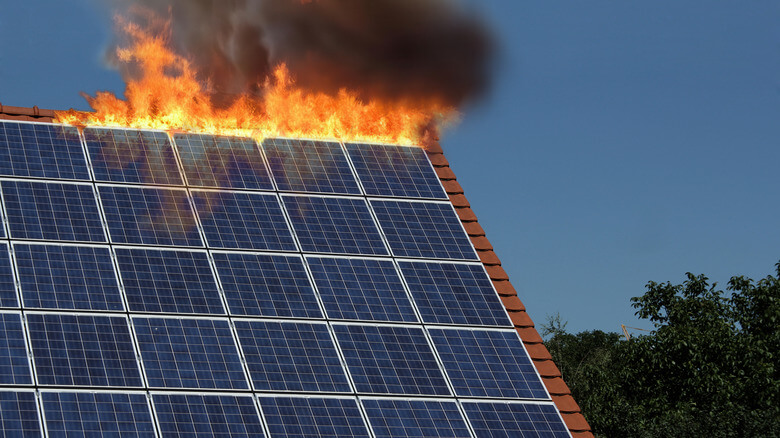
Yes, solar panels usually continue generating electricity during wildfire smoke as long as sufficient sunlight reaches them and the solar system remains operational.
- Smoke does not automatically switch solar panels off.
- Photovoltaic panels convert sunlight into electricity through their semiconductor cells.
- They can produce power under direct sunlight and diffuse light.
- However, thick smoke reduces the amount and changes the distribution of sunlight reaching the panel surface.
- This may lower the amount of electricity generated.
- The effect can be especially noticeable when smoke becomes dense enough to substantially reduce daylight.
Does Smoke Completely Block Solar Power?
- Usually not.
- Even during smoky conditions, some sunlight can pass through the atmosphere.
- Solar panels may continue producing electricity at a reduced rate.
- Extremely dense smoke, heavy cloud cover, or ash accumulation can cause larger reductions.
The exact result depends on conditions.
A rooftop system that normally generates substantial electricity during a clear afternoon might produce considerably less electricity during a heavy smoke event.
The size of that decline cannot be predicted from the presence of visible haze alone.
How Does Wildfire Smoke Affect Solar Panel Efficiency?
Wildfire smoke contains airborne particles, including fine particulate matter commonly measured as PM2.5.
These particles interact with sunlight.
Some light is scattered in different directions, while some is absorbed before it reaches the ground.
Solar panels depend on the solar radiation that reaches their surface.
When less usable radiation arrives, electrical output generally falls.
Direct Sunlight vs. Diffuse Sunlight
Sunlight reaching the ground can be described in two broad categories.
Direct sunlight travels from the sun toward the ground without being scattered.
Diffuse sunlight has been scattered by particles, clouds, and other substances in the atmosphere.
Solar panels can use both types of light.
During some atmospheric conditions, scattered light can still support useful electricity production.
However, when wildfire smoke becomes sufficiently dense, the overall reduction in available solar radiation usually outweighs any benefit from additional diffuse light.
This explains why solar panels may continue operating while producing less electricity.
How Much Solar Power Can Wildfire Smoke Reduce?
The effect varies substantially across regions and events.
Several research studies have measured or modeled the relationship between wildfire smoke and photovoltaic electricity production.
Research findings on solar generation losses
7.68%
Average modeled loss during smoky hours in an Alberta study
4%
Estimated share of potential annual California solar generation lost to PM2.5 pollution in a study
2.8%
Modeled five-month PV generation deficit across North America and Europe during 2023 wildfire conditions
These figures represent different locations, periods, and study methods. They are not universal loss percentages for individual home solar installations. ScienceDirect+2
A 2026 study published in Energy Economics examined the effects of wildfire smoke on solar photovoltaic production in Alberta, Canada.
Researchers estimated an average reduction of 7.68% in expected production during smoke-affected hours under their study conditions.
The loss reached 11.15% at the most affected site. ScienceDirect
Another study published in 2025 examined smoke-related air pollution and rooftop solar power in California. It estimated that PM2.5 pollution reduced annual potential solar generation by more than 450 gigawatt-hours, representing approximately 4% of potential generation in the study. RCNi Company Limited
These findings demonstrate that wildfire smoke can affect solar electricity production over large geographic areas.
They do not mean every household will experience the same percentage reduction.
Why Do Solar Panels Produce Less Electricity During Smoke?
Several factors can contribute.
1. Reduced Solar Radiation
Dense smoke prevents some sunlight from reaching the ground.
Less available solar radiation generally means less electricity generation.
2. Changes in the Quality of Sunlight
Smoke affects different wavelengths of sunlight differently.
Because solar cells respond to the amount and spectral composition of incoming light, atmospheric changes can influence their output.
3. Ash and Soot on Panel Surfaces
Smoke particles in the atmosphere are different from deposits left on a solar panel.
If ash or soot settles on the glass, the material can block part of the incoming light even after the sky clears.
Rain may remove some deposits, but not necessarily all of them.
4. Changes in Weather Conditions
Wildfires can occur during periods of unusual heat, wind, or atmospheric instability.
Temperature and cloud conditions also affect panel performance.
Therefore, reduced solar production during a wildfire is not always caused entirely by smoke.
Step-by-Step Guide: How to Check Solar Panel Performance During Wildfire Smoke
Homeowners can use their monitoring system to understand whether smoke is affecting production.
Step 1: Open Your Solar Monitoring App
Most modern residential solar systems provide some form of production monitoring.
This may be available through a smartphone app, inverter display, or online dashboard.
Locate the system’s daily energy production information.
Check whether the system is connected and reporting data normally.
Step 2: Compare Production With Similar Clear Days
Find a recent day with similar daylight hours and relatively clear skies.
Compare total energy generation.
Avoid comparing a smoky summer day with a winter day because seasonal sunlight levels differ.
An hourly power curve may also be more useful than daily totals.
Step 3: Check Local Smoke Conditions
Use reliable air-quality and weather information.
The AirNow Fire and Smoke Map provides U.S. wildfire smoke and air-quality information.
Pay attention to smoke forecasts, particulate pollution, and visible atmospheric conditions.
Air-quality measurements alone do not directly measure the exact amount of sunlight reaching your panels, but they can help identify possible smoke-related conditions.
Step 4: Examine the Solar Power Curve
Look at electricity production throughout the day.
On a relatively clear day, production often rises after sunrise, reaches a broad peak around the strongest sunlight, and declines toward sunset.
Smoke may reduce the curve’s height or create uneven production.
However, passing clouds can cause similar changes.
Use the information as an indicator, not absolute proof.
Step 5: Check for System Alerts
Review any inverter or battery notifications.
A solar system can lose production because of electrical faults, inverter shutdowns, shading, or utility-related operating conditions.
If the monitoring system reports an equipment problem, follow the manufacturer’s troubleshooting instructions.
Do not assume every reduction is caused by smoke.
Step 6: Wait for Conditions to Improve
If the system is functioning normally and smoke is the likely cause, the best action may be to monitor the situation.
As smoke decreases, solar production may improve.
Do not attempt to modify solar panels or inverter settings to compensate for atmospheric conditions.
Step 7: Arrange a Professional Inspection if Needed
If output remains unusually low after the smoke clears, inspect the monitoring data for persistent issues.
A qualified solar technician can evaluate the inverter, electrical connections, panel condition, and accumulated deposits.
Homeowners should not climb onto roofs during wildfire smoke events.
Example: Solar Production During a Smoke Event
Consider a hypothetical rooftop system that normally generates 30 kilowatt-hours of electricity on a particular clear day.
If the same system experiences a 20% reduction in generation under comparable conditions, the output would be approximately 24 kilowatt-hours.
That represents a loss of six kilowatt-hours for the day.
This is only a mathematical example, not a prediction of typical wildfire losses.
Actual results depend on sunlight, smoke, cloud cover, panel orientation, and many other factors.
Solar Performance Comparison
| Condition | General solar performance |
|---|---|
| Clear sky | Strong production when sunlight is available |
| Light smoke | May cause a relatively small reduction |
| Moderate smoke | May produce a more noticeable decline |
| Heavy smoke | Can substantially reduce generation |
| Smoke with ash deposition | May cause additional surface-related losses |
| Clear sky after smoke | Production may recover if the panels remain clean and functional |
Can Wildfire Ash Damage Solar Panels?
Ash and soot can accumulate on exposed surfaces.
A small amount of residue may simply reduce the sunlight reaching the panels.
However, heavy deposits or fire-related debris can require professional cleaning and inspection.
If a wildfire occurs close to the solar installation, heat exposure and physical debris may create additional concerns.
Should You Wash Solar Panels After Wildfire Smoke?
Do not rush onto the roof to clean them.
First, wait until air quality improves and local officials indicate that outdoor conditions are safe.
Check the solar manufacturer’s cleaning instructions.
Avoid abrasive cleaners, excessive pressure, and other methods that could scratch the panel glass or damage seals.
If the panels are mounted on a roof, professional cleaning is generally safer than climbing up yourself.
Never spray water onto visibly damaged electrical equipment.
Do Solar Panels Work During Wildfire Power Outages?
This question is different from whether smoke reduces solar generation.
A standard grid-connected solar installation normally shuts down during a utility outage to prevent dangerous backfeeding into power lines.
Therefore, solar panels may be physically capable of generating electricity while the homeowner still has no usable household solar power.
Some systems are designed with compatible batteries, special inverters, and approved backup configurations.
These may supply selected household loads when the grid is unavailable.
Whether a particular installation can provide backup depends on its electrical design.
Can Solar Batteries Help During Smoke Events?
A home battery can store electricity generated when solar production is available.
During periods of reduced sunlight, stored energy may help supply household loads.
However, batteries have limited capacity.
An extended smoke event may reduce the amount of electricity available for charging.
A battery does not eliminate the effects of heavy smoke on solar generation.
How to Prepare Your Solar System for Wildfire Season
Review Your Solar Monitoring System
Check that monitoring alerts are enabled and that production data is accessible.
This helps identify changes during smoke events.
Understand Your Backup Capabilities
If your system includes a battery, learn which electrical circuits receive backup power.
Do not assume every outlet in the house will operate during an outage.
Keep Equipment Accessible
Ensure that the inverter and disconnect equipment remain accessible as required.
Do not store flammable materials near electrical equipment.
Follow Wildfire Safety Guidance
During nearby fires, personal safety is more important than solar production.
Follow evacuation orders and local emergency instructions.
Avoid outdoor maintenance during unhealthy air-quality conditions.
Review Your Insurance Coverage
If you live in a wildfire-prone area, understand whether your policy covers smoke-related physical damage, ash cleanup, and direct fire damage to solar equipment.
Coverage depends on the insurance contract.
Common Myths About Wildfire Smoke and Solar Panels
Myth: Solar panels stop working whenever there is smoke.
False. Panels can continue producing electricity if sufficient sunlight reaches them.
Myth: Wildfire smoke permanently damages every solar panel.
False. Smoke-related loss of sunlight is usually a temporary atmospheric effect. Physical ash, heat, or debris damage is a separate issue.
Myth: Solar panels always work during a power outage.
False. Standard grid-connected systems generally shut down unless specifically designed for backup operation.
Myth: A solar battery guarantees unlimited power during wildfire smoke.
False. Stored energy is finite, and reduced sunlight can limit recharging.
FAQs About Solar Panels During Wildfire Smoke
Do solar panels still generate electricity during wildfire smoke?
Yes. Solar panels can continue generating electricity during wildfire smoke, although production may decrease because smoke particles scatter and absorb sunlight. The reduction depends on smoke density, weather conditions, and the solar system’s characteristics.
How much does wildfire smoke reduce solar panel efficiency?
There is no single percentage that applies everywhere. Studies have measured meaningful production losses during smoke events, including average reductions of several percentage points under particular conditions. Heavy smoke can cause larger losses, but homeowners should use actual monitoring data rather than assuming a fixed reduction.
Can wildfire smoke permanently damage solar panels?
Smoke in the atmosphere generally affects the amount of sunlight reaching the panels rather than permanently damaging the photovoltaic cells. However, ash deposits, extreme heat, falling debris, and direct wildfire exposure can cause physical damage that requires inspection.
Should I clean my solar panels after a wildfire?
Cleaning may be useful if ash or soot remains on the panels, but safety comes first. Wait for suitable air-quality conditions and follow the manufacturer’s instructions. Professional cleaning is recommended for rooftop panels or systems that may have been physically damaged.
Will solar panels power my house during a wildfire-related outage?
Not necessarily. Standard grid-connected solar systems generally stop providing power during utility outages. A properly installed backup-capable inverter and battery system may supply electricity to designated circuits, depending on the equipment and installation.
Does smoke affect solar panels more than clouds?
It depends on the density and optical properties of the smoke and clouds. Heavy clouds can reduce solar generation substantially, while smoke can create different patterns of sunlight scattering and absorption. Neither condition produces a universal percentage reduction.
Conclusion
So, do solar panels work during wildfire smoke? Yes. Solar panels generally continue producing electricity when sunlight reaches them, but wildfire smoke can lower output by blocking and scattering part of the available solar radiation.
Research shows that wildfire smoke has measurable effects on residential and large-scale solar electricity production. Homeowners can monitor changes through solar production apps, local air-quality information, and comparisons with suitable clear-sky days.
If output remains unusually low after smoke conditions improve, a professional inspection may be appropriate. Solar energy remains a useful renewable energy resource, but understanding smoke-related performance changes helps homeowners plan more effectively for wildfire conditions.
Related Keywords: Wildfire smoke solar panel efficiency, solar panels in smoky weather, wildfire impact on solar energy, solar panel output during smoke, rooftop solar power production, solar panels and air pollution