

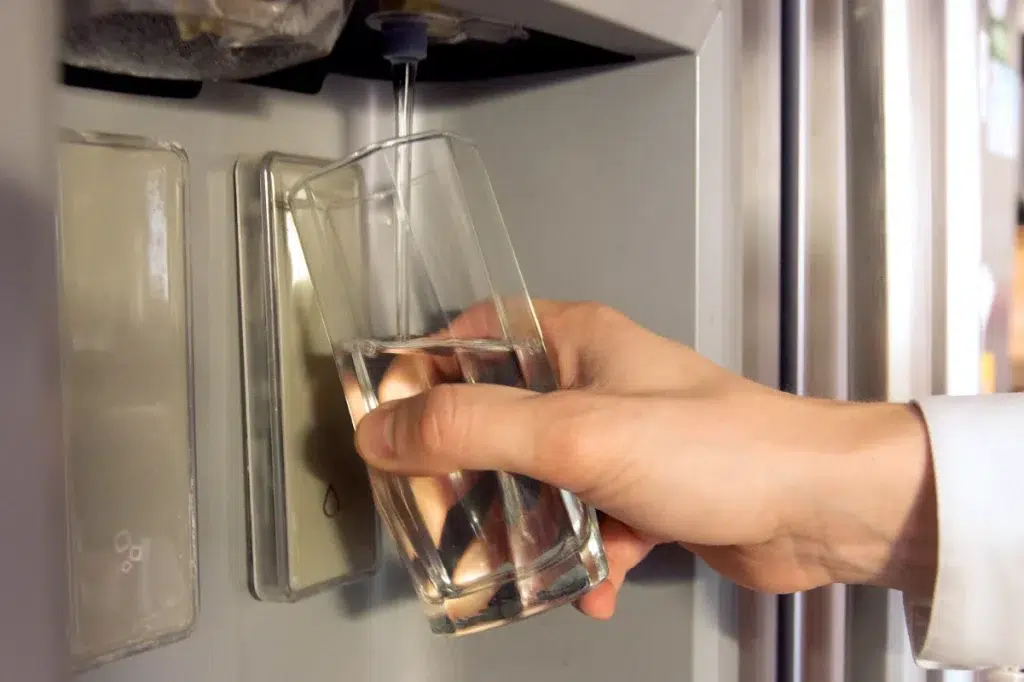
Refrigerator water filters help households improve the taste and quality of drinking water. Many modern refrigerators use replaceable filters to reduce selected contaminants, odors, and particles from water supplied through the refrigerator’s dispenser or ice maker.
However, these filters do not last forever. Depending on the product and water conditions, a refrigerator water filter may need replacing approximately every six months. Over several years, a household can accumulate many used cartridges.
This creates a common question: How can you recycle refrigerator water filters instead of throwing them away?
The answer is not as simple as placing the filter into a plastic recycling container. Refrigerator filters typically contain several materials, including a plastic casing, activated carbon, seals, and other filtration components.
These mixed materials can make recycling difficult. Some manufacturers or specialized programs may offer recycling options, but availability depends on the brand, cartridge type, and location.
This guide explains how refrigerator filters work, how to prepare old cartridges, where to look for recycling services in the United States, and what to do when no recycling program is available.
Can Refrigerator Water Filters Be Recycled?
Some refrigerator water filters can be recycled through specialized programs, but most should not be placed in ordinary curbside recycling unless the local recycler explicitly accepts them.
The plastic housing alone does not mean that the entire cartridge is recyclable through a standard household program. Inside the cartridge, filtration materials may be permanently enclosed.
These materials must often be separated through specialized processing before any portion can be recovered. The first step is to identify the filter’s manufacturer and model number.
After that, check for an authorized recycling or take-back program. If no accepted recycling route exists, follow local waste authority guidance rather than placing the filter in a recycling bin where it may contaminate other materials.
What Are Refrigerator Water Filters Made Of?
Most refrigerator filters contain more than one material.
| Component | Function | Recycling consideration |
|---|---|---|
| Plastic housing | Holds the filtration materials | May require specialized separation |
| Activated carbon | Absorbs selected contaminants | Not ordinarily accepted as household compost or recycling |
| Filter membranes or media | Helps remove selected substances | Requires appropriate processing |
| Rubber seals | Prevents water leaks | Usually not accepted in curbside recycling |
| Internal screens or supports | Keeps the cartridge assembled | May contain mixed materials |
| Metal components | Used in some cartridge designs | Depends on the specific filter |
Some filters use activated carbon made from coconut shells, while others combine different filtration technologies. Not every refrigerator filter removes the same contaminants.
The U.S. Environmental Protection Agency recommends selecting drinking water filters according to the contaminants you need to address and using independently verified performance information.
How to Recycle Refrigerator Water Filters: Step-by-Step Guide
Step 1: Identify Your Refrigerator Water Filter
Start by locating the exact filter model.
This information may be printed on the cartridge body or listed in the refrigerator’s owner’s manual.
Common refrigerator manufacturers include:
- Whirlpool
- GE Appliances
- Samsung
- LG
- Frigidaire
- KitchenAid
Some refrigerators use filters sold under a separate filtration brand.
Write down the full product number before searching for recycling instructions.
This matters because two filters from the same refrigerator manufacturer may have different construction and disposal requirements.
Step 2: Remove the Old Filter Correctly
Follow your refrigerator’s replacement instructions.
Depending on the model, the filter may be inside the refrigerator compartment or near the lower grille.
A typical replacement process involves:
- Locate the filter housing.
- Place a towel beneath it to catch drips.
- Release the filter according to the manufacturer’s instructions.
- Remove the cartridge carefully.
- Keep it upright until excess water has drained.
- Install the compatible new cartridge.
- Flush the replacement filter as directed.
Do not force a cartridge that is stuck.
For example, some Whirlpool filters twist out, while others use a push-button release. GE Appliances also provides model-specific removal instructions.
Step 3: Drain the Used Water Filter
After removing the cartridge, allow excess water to drain.
Place it over a sink or in a suitable container and follow any preparation instructions supplied by the recycling program.
Avoid leaving a wet filter inside a sealed shipping box.
Some take-back programs specify how long a filter should dry before shipment.
Do not assume that every program has the same requirements.
Step 4: Check the Manufacturer’s Recycling Policy
Visit the official website of the filter manufacturer.
Look for information about recycling, returns, take-back services, or cartridge disposal.
Some brands offer recycling programs in selected countries but not in others.
For example, BRITA describes cartridge collection programs in several European markets, but those arrangements should not be assumed to apply to U.S. refrigerator filters.
GE Appliances states in its refrigerator filter support documentation that it does not currently have a water-filter recycling program. How to Change the Water Filter
These examples show why checking the exact manufacturer and country is essential.
Step 5: Contact Your Local Recycling Authority
If the manufacturer does not offer a take-back program, contact your city or county recycling department.
Explain that you have a used refrigerator drinking-water filter cartridge.
Ask whether it is accepted through a specialized collection service.
Useful questions include:
- Do you accept sealed water filter cartridges?
- Should the cartridge be dried before drop-off?
- Are mixed-material water filters accepted?
- Is there an approved third-party recycling provider?
- If recycling is unavailable, what is the correct disposal method?
Do not place the filter into curbside recycling until you receive confirmation.
Step 6: Check Specialized Recycling Programs
Some specialized recycling providers handle difficult-to-recycle products.
However, programs can have enrollment restrictions, brand requirements, fees, and country limitations.
Read the accepted-items list carefully.
A program that accepts pitcher filters does not necessarily accept refrigerator water filters.
Likewise, a program operating in the United Kingdom or Europe should not be presented as an active U.S. recycling option.
Before paying for a shipping service, confirm that the operator accepts the exact cartridge and provides a genuine recycling process.
Step 7: Package the Filter According to Program Instructions
If an authorized recycling service accepts your filter, prepare it according to the service’s requirements.
These may include draining the cartridge, placing it in a protective bag, or using a particular shipping label.
Do not dismantle the cartridge unless the program specifically requires it and supplies safe instructions.
Keep the filter’s identifying label available whenever possible.
Step 8: Dispose of the Filter Responsibly if Recycling Is Unavailable
Sometimes no suitable recycling program is available.
In that situation, follow the waste disposal rules provided by your local authority and the manufacturer.
For an ordinary household refrigerator water filter, this may mean putting the used cartridge into regular solid waste, where legally permitted.
This is preferable to contaminating a recycling stream with a material the facility cannot process.
It is also more responsible than using an unverified recycler simply because the service advertises environmental benefits.
Refrigerator Water Filter Recycling by Brand
| Brand | What homeowners should do |
|---|---|
| Whirlpool | Check the exact filter product and official support guidance |
| everydrop | Verify whether a current U.S. take-back service accepts the cartridge |
| GE Appliances | Official guidance states no filter recycling program is currently offered |
| Samsung | Check the current U.S. filter support and disposal guidance |
| LG | Verify the cartridge model and available local disposal services |
| Frigidaire | Consult product documentation and local recycling requirements |
| BRITA | Confirm the specific product and country; European programs are not automatically available in the USA |
This table does not imply that all listed companies operate recycling programs.
Programs change, so avoid relying on old blog posts or third-party advertisements when deciding how to return a cartridge.
Why Are Refrigerator Water Filters Difficult to Recycle?
Recycling works best when collected materials can be sorted and processed efficiently.
A water filter is more complicated than a simple plastic bottle.
Its casing may be tightly sealed around activated carbon, membranes, and other materials.
The plastic may not be easily separated without industrial processing.
The filter media may also contain contaminants collected from drinking water.
Because of these challenges, many local recycling centers do not accept the cartridges.
A recycling symbol printed on one component does not automatically mean the assembled cartridge is accepted by local recyclers.
Can You Open a Refrigerator Filter to Recycle the Plastic?
It is generally not recommended.
Cutting open a used cartridge can create unnecessary exposure to wet filtration materials and may produce sharp plastic edges.
Even after opening it, the plastic might not meet your local recycling program’s acceptance rules.
Unless a verified program provides safe disassembly instructions, keep the cartridge intact.
How to Reduce Refrigerator Water Filter Waste?
Recycling is useful when available, but avoiding unnecessary waste is also important.
Replace the Filter at the Correct Time
Do not replace a filter simply because you have forgotten when it was installed.
Check the refrigerator’s indicator and manufacturer’s replacement instructions.
Many products recommend a replacement interval of approximately six months, but the actual schedule depends on the model and usage.
Whirlpool recommends replacing many refrigerator filters every six months or as needed. Whirlpool
Do not extend filter use beyond the recommended period solely to reduce plastic waste. Drinking-water safety and proper filtration must take priority.
Buy Compatible, Verified Replacement Filters
Select replacements that meet the manufacturer’s specifications.
Where relevant, look for appropriate NSF/ANSI certification for the contaminants you want to reduce.
An inexpensive counterfeit filter may fail to perform as advertised or create leakage problems.
GE Appliances warns that counterfeit water filters may not meet the drinking-water treatment standards claimed by their sellers. Genuine Water Filter vs Counterfeit Filter
Avoid Unnecessary Filter Purchases
Keep track of your current filter model and replacement date.
Buying the wrong cartridge can create waste when the product cannot be returned or installed.
Confirm compatibility before placing an order.
Consider the Complete Water Treatment System
Households with high water consumption may want to compare available filtration approaches.
Options may include refrigerator filters, faucet systems, and under-sink filtration units.
Each has different maintenance requirements and environmental considerations.
Choose based on water quality, certified contaminant reduction, total cost, and suitability for your household.
What Should You Do With Used Activated Carbon?
Some people suggest removing activated carbon from refrigerator filters and spreading it in gardens or compost piles.
This is not a recommended general practice.
Used filtration media may contain substances captured during water treatment.
Without knowing the filter’s composition and what it has collected, it is difficult to establish that the material is safe for gardening.
Do not add used filter carbon to vegetable beds, compost, or household soil simply because activated carbon is sometimes used in other applications.
Follow the manufacturer’s disposal advice.
Also Read:
- How to Dispose of Solar Garden Lights Safely in the USA?
- Do Solar Panels Work During Wildfire Smoke? Efficiency Explained
- How to Clean a Heat Pump Water Heater Air Filter: Step-by-Step Guide
Common Refrigerator Filter Recycling Mistakes
Avoid these problems:
- Putting a complete cartridge into ordinary plastic recycling without permission.
- Assuming a recycling program in another country is available in the United States.
- Shipping filters to an unverified collection address.
- Breaking the cartridge open unnecessarily.
- Putting used filtration media into compost.
- Reusing an exhausted disposable cartridge.
- Buying incompatible filters based only on appearance.
FAQs About Recycling Refrigerator Water Filters
Can refrigerator water filters be recycled?
Some can be recycled through specialized programs, but many are not accepted by ordinary curbside recycling services. Check the filter manufacturer’s current take-back policy and your local waste authority’s rules. Recycling availability depends on the cartridge and collection program.
Can I put a used refrigerator water filter in the recycling bin?
Do not place the entire cartridge into household recycling unless your local program specifically accepts it. Most filters contain mixed materials, including plastic and filtration media, that can be difficult to separate through standard recycling processes.
Does GE Appliances recycle refrigerator water filters?
GE Appliances states in its official filter replacement guidance that it does not currently offer a refrigerator water-filter recycling program. Check the company’s latest support information before making disposal decisions because manufacturer policies can change.
Can I recycle Whirlpool or everydrop refrigerator filters?
Check the current U.S. recycling instructions for your exact Whirlpool or everydrop filter model. Do not assume a take-back program exists. If the manufacturer does not provide an eligible program, contact your local waste authority for disposal guidance.
Is it safe to reuse an old refrigerator water filter?
Disposable refrigerator water filters are not designed for indefinite reuse. Cleaning the outer casing does not restore exhausted filtration media. Replace the cartridge according to the manufacturer’s instructions rather than attempting to regenerate it at home.
What can I do if no recycling center accepts my refrigerator filter?
Follow your local authority’s disposal rules. Some areas permit ordinary household disposal of used refrigerator filter cartridges. Do not send them to an unsuitable recycling program or add used filtration media to garden soil.
Conclusion
Understanding how to recycle refrigerator water filters begins with identifying the exact cartridge and checking whether a suitable collection program exists.
Because refrigerator filters contain several materials, standard curbside recycling is often not an appropriate option.
Start with the manufacturer, then contact your local recycling authority and check legitimate specialized recycling services.
If recycling is unavailable, dispose of the cartridge according to local rules.
You can also reduce unnecessary waste by purchasing the correct filter, following replacement schedules, and choosing a suitable filtration system for your home.
Related Keywords: Refrigerator water filter recycling, used refrigerator water filter disposal, fridge filter recycling near me, recycle old water filters, refrigerator filter replacement, water filter waste